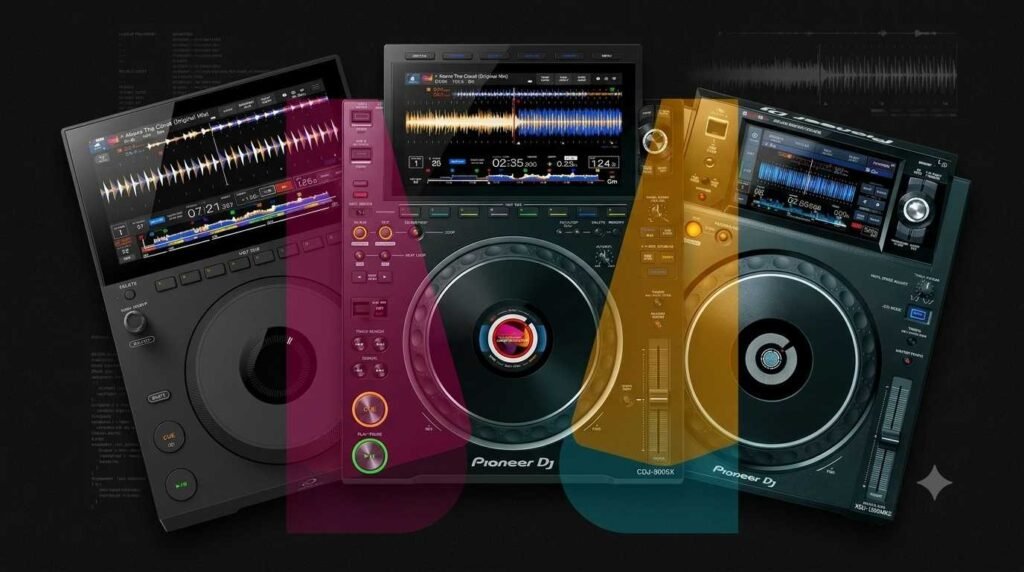
Compared · Media Players · Jul 2026
AlphaTheta’s new compact CDJ finally gives home DJs and smaller venues a real choice. Here’s how the 1500X stacks up against the club flagship above it and the decade-old XDJ it replaces — with a bias toward producers and smaller rooms.
For producers, home setups and smaller venues, the CDJ-1500X is the one to buy — the 3000X’s 10.1″ screen and cloud/streaming tools at roughly half the price and weight. Stretch to the CDJ-3000X only if you play real club and festival rigs and need its full-size jog, digital output and dedicated key controls. Skip the ageing XDJ-1000MK2 unless you find one at a genuine clearance price and specifically want its digital coaxial out.
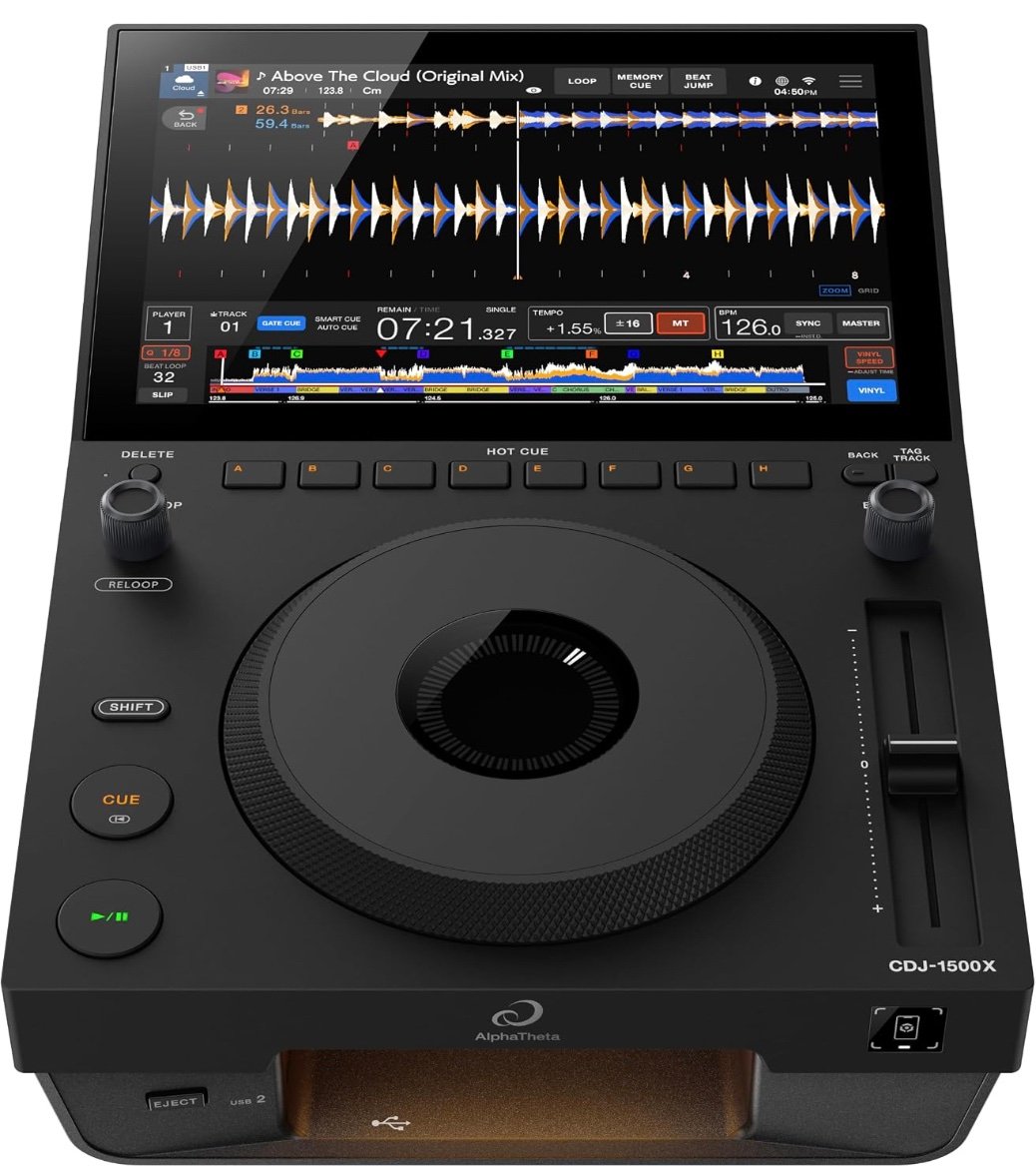
Compact · 2026
CDJ-1500X
~$1,599International (excl. tax) · $1,699 US
3000X screen & cloud stack in a half-price, half-weight body. The one to beat for home and small venues.
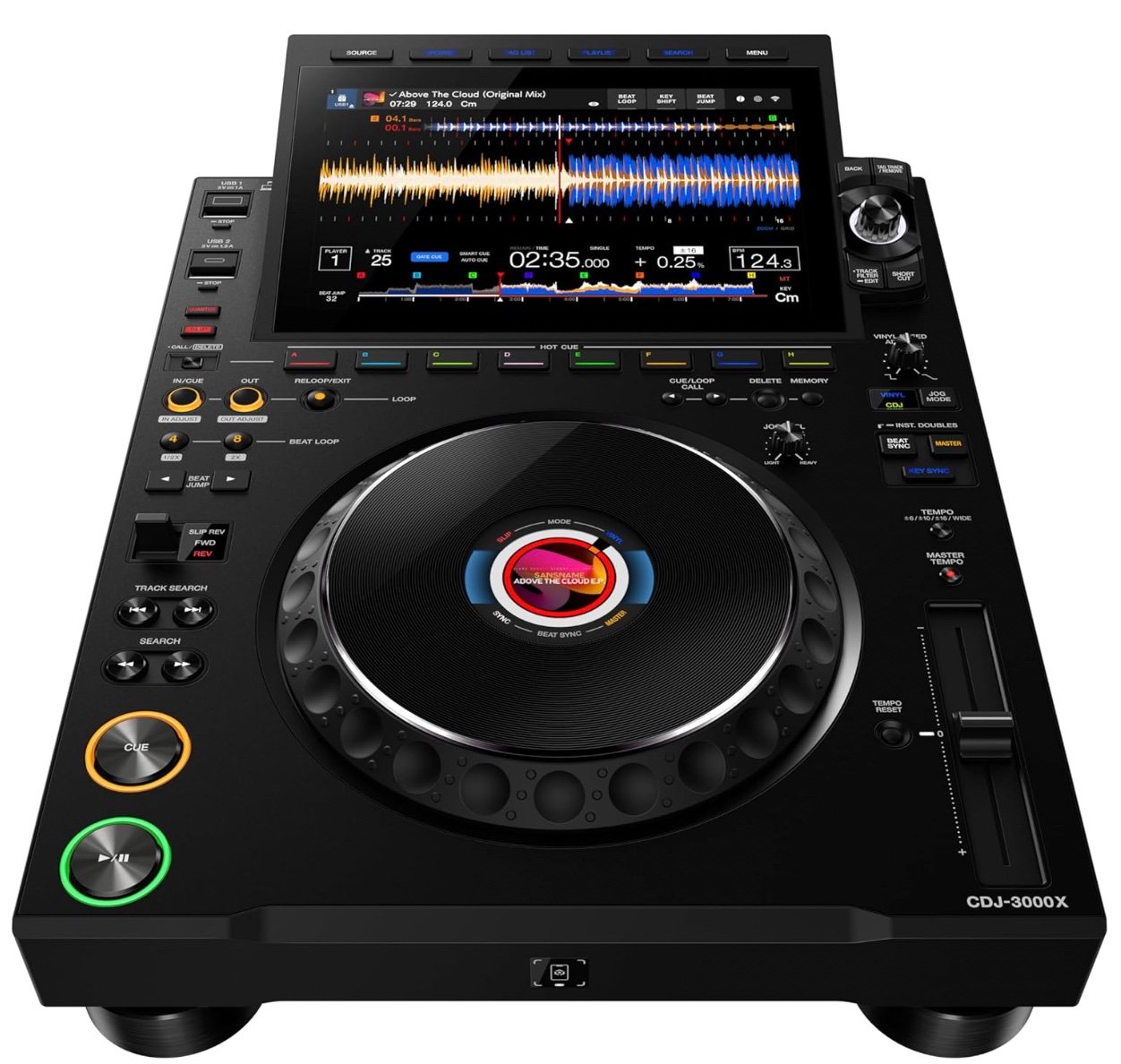
Club standard · 2025
CDJ-3000X
~$2,999US · £2,399 UK
Full-size jog, digital out, flagship DAC and every physical control. Built for big systems and touring.
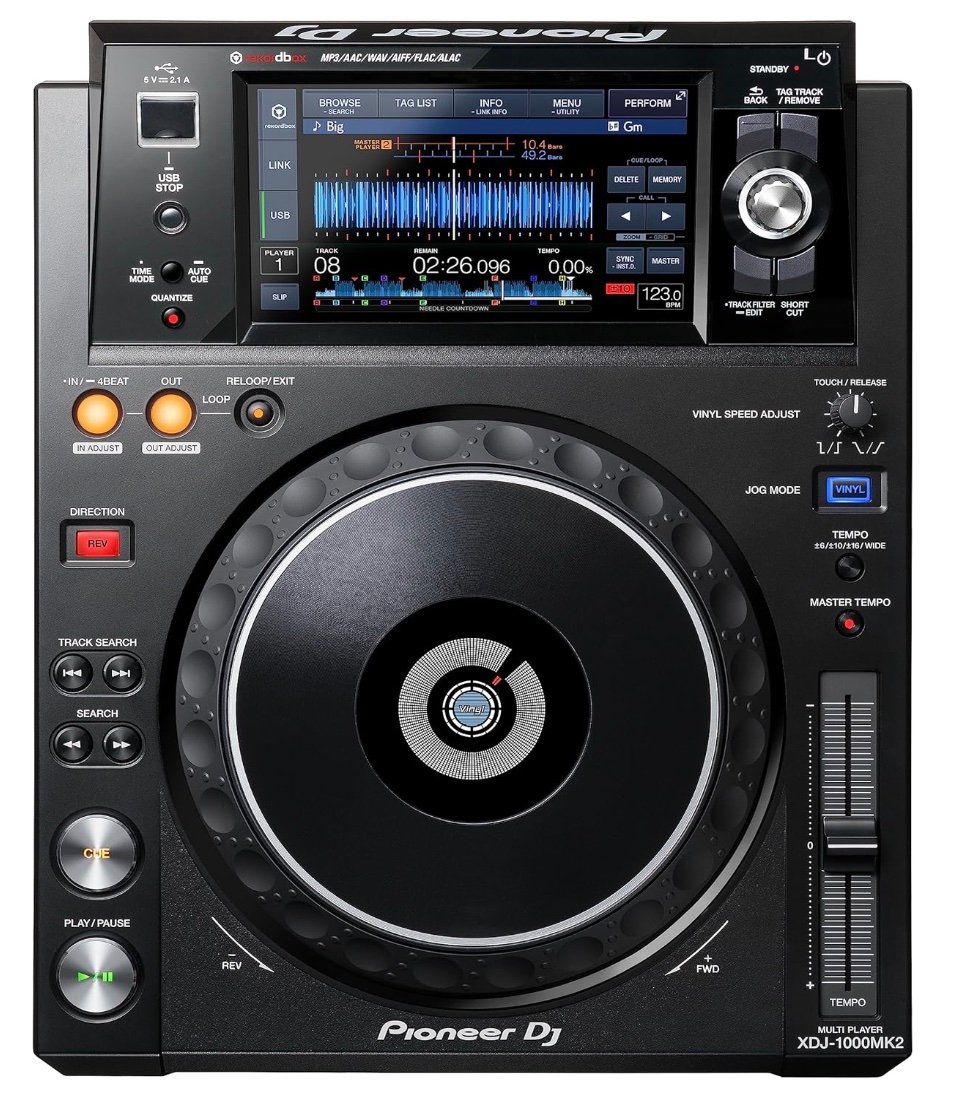
Being phased out · 2016
XDJ-1000MK2
~$1,359Legacy / clearance pricing
The player the 1500X replaces. Bigger jog and digital out, but a tiny 7″ screen and no Wi-Fi or cloud.
Quick orientation: the 3000X sits above the 1500X as the club flagship; the XDJ-1000MK2 sits below it as the ageing player it succeeds. So the real decision for most people is “1500X, or stretch to the 3000X / save on a legacy XDJ?”
The full comparison
CDJ-1500X vs CDJ-3000X: stretch, or save?
This is the real decision for most buyers, and it comes down to what you’re plugging into. The 1500X gives you the flagship’s screen, the same cloud and streaming tools, and around 80–90% of the everyday workflow — for roughly $1,400 less. What the extra money buys on the 3000X is club muscle: a full-size jog with adjustable tension, the complete physical control array (including dedicated key sync and shift), digital coaxial output, and a measurably better audio path built around a 96 kHz/32-bit ESS DAC.
In a bar, a lounge, a home studio or a production rig, almost none of that gap is audible or even reachable — you’ll never miss a 4 Hz low end or a digital output feeding a compact mixer. On a big club system with a six-figure PA and a booth full of touring DJs, it’s exactly why the flagship still costs what it does. For producers and smaller venues, the 1500X is the smart buy; the 3000X is the answer only if you genuinely play the rooms that justify it. If you’re building the wider setup, our DJ mixer buying guide covers the DJM-class options that pair naturally with either.
CDJ-1500X vs XDJ-1000MK2: the true successor?
On paper this looks close on price, but they’re a decade apart in every way that matters. The XDJ-1000MK2 gives you a bigger jog and a digital coaxial output the 1500X drops — genuine points in its favour if either is a dealbreaker for you. Everything else favours the newcomer: a 10.1″ screen versus the XDJ’s cramped 7″, built-in Wi-Fi, cloud playback, streaming from Apple Music, Beatport and Tidal, NFC login and CoBeat. The XDJ has none of that.
The catch is availability. The XDJ-1000MK2 launched back in 2016 and is now being quietly phased out; new stock is clearance-priced and won’t last. Buying one in 2026 means buying decade-old hardware at not much of a discount over a far more capable new player. Unless you specifically need that digital output or full-size jog and can find one cheap, the 1500X is the obvious pick.
One thing the 1500X drops that the older XDJ-1000MK2 actually had: a digital output. If your mixer or install relies on a digital coaxial feed, that’s a real consideration — not a small-print detail.
Which one should you buy?
Buy the CDJ-1500X if…
You’re a producer, home DJ or smaller venue who wants a modern CDJ workflow — screen, cloud, streaming — without club-money outlay or a club-sized footprint. For most people reading this, this is the one. Read our full CDJ-1500X review for the deep dive.
Stretch to the CDJ-3000X if…
You play or install in real club and festival environments, need digital output and a full-size jog, or rely on dedicated key sync and shift. It’s the flagship for a reason — just make sure you actually play the rooms that use it. Our full CDJ-3000X review goes deeper on exactly what that extra money buys.
Consider the XDJ-1000MK2 only if…
You find one at a genuine clearance price and specifically want its full-size jog or digital coaxial out. Otherwise you’re paying near-current money for decade-old hardware — the 1500X does more for similar spend.
Still deciding between separates and an all-in-one, or which software to run them with? Our DJ software comparison and the wider controllers and decks guides are the logical next stops.
★ Some links on this page are affiliate links. If you buy through them, we earn a small commission at no extra cost to you — it helps fund independent testing and writing, and never changes our verdict. We only recommend gear we’d use ourselves. Read our full disclosure →