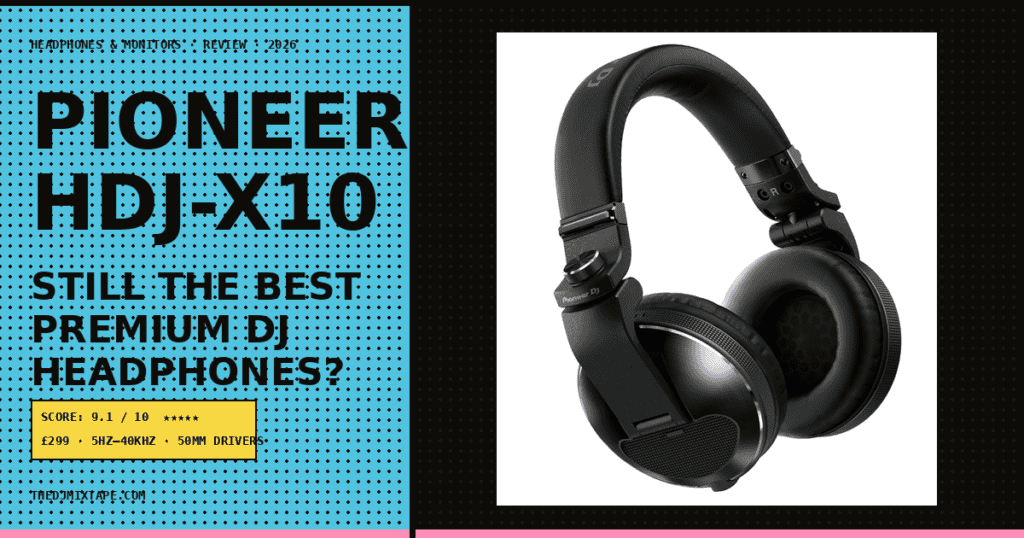
Pioneer
HDJ-X10
Review (2026)
There are two ways to pick DJ headphones. The first is to get whatever’s cheapest that does the job — something with a bit of bass, a fold for the bag, and a 3.5mm jack. The second is to take them seriously, buy once, and never think about it again.
The Pioneer HDJ-X10 is firmly the second option. It’s the flagship of Pioneer’s HDJ-X range — the one at the top of the ladder, where the build gets properly serious and the spec sheet starts claiming things like 5Hz to 40kHz frequency response. It’s aimed at working DJs who spend night after night in booths, who need headphones that survive travel, sweat, and daily punishment without falling apart.
They’ve been on the market for a few years now, and the question worth asking in 2026 is whether they’re still the benchmark — or whether newer competition has caught up. The short answer is they remain the standard. Here’s why.
Check price on Amazon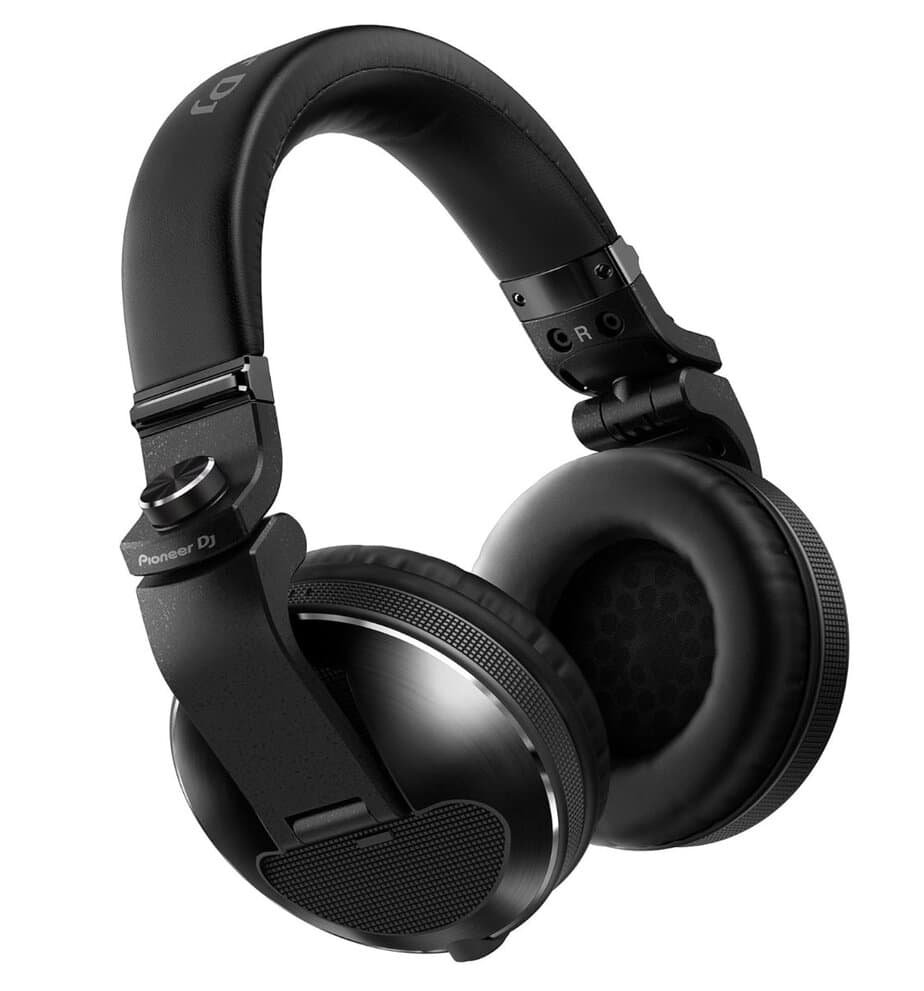
Who are the HDJ-X10 actually for?
Let’s get this out of the way early. The HDJ-X10 are DJ headphones, not studio monitors you wear on your head. The sound signature is coloured — punchy, energetic, bright — designed to cut through a loud monitor system and give you a clear read of your mix in a booth environment. If you want flat, reference-accurate monitoring for music production, look at Sony MDR-7506s or Beyerdynamic DT 770s. That’s not what these are.
What the HDJ-X10 are is the best headphone Pioneer makes for the specific job of DJing. Club DJs, electronic music DJs, open-format DJs who need strong isolation and a sound that holds up over a loud PA — these are built for exactly that use case.
They’re also built for people who treat their gear hard. The replaceable ear pads, metal-reinforced construction, and nanocoated headband and earcups (Pioneer’s sweat and dirt resistance coating) are not marketing fluff — they’re the difference between headphones that last three years and headphones that last ten.
Build and design: serious hardware
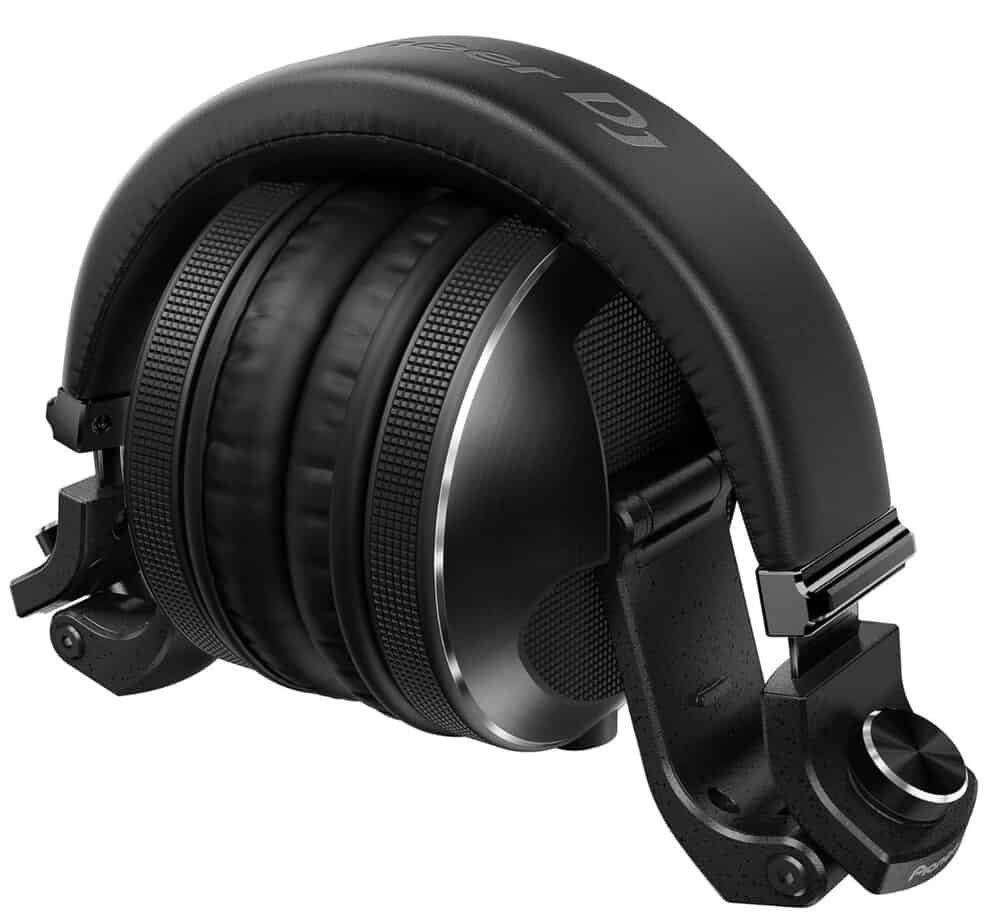
Pick the HDJ-X10 up and the first thing you notice is weight. At 328g without cable, they’re not the lightest headphones in the world — but they feel substantial in a way that inspires confidence rather than concern. The metal-reinforced frame is the reason. This is not plastic that’ll crack when you fold them into a bag at 4am.
The design is clean and functional. Swivelling earcups for one-ear monitoring, a foldable frame for transport, and a slimline headband that sits comfortably for extended sessions. The earcups rotate a full 90 degrees, which makes sliding one ear off to monitor through the booth speakers feel completely natural.
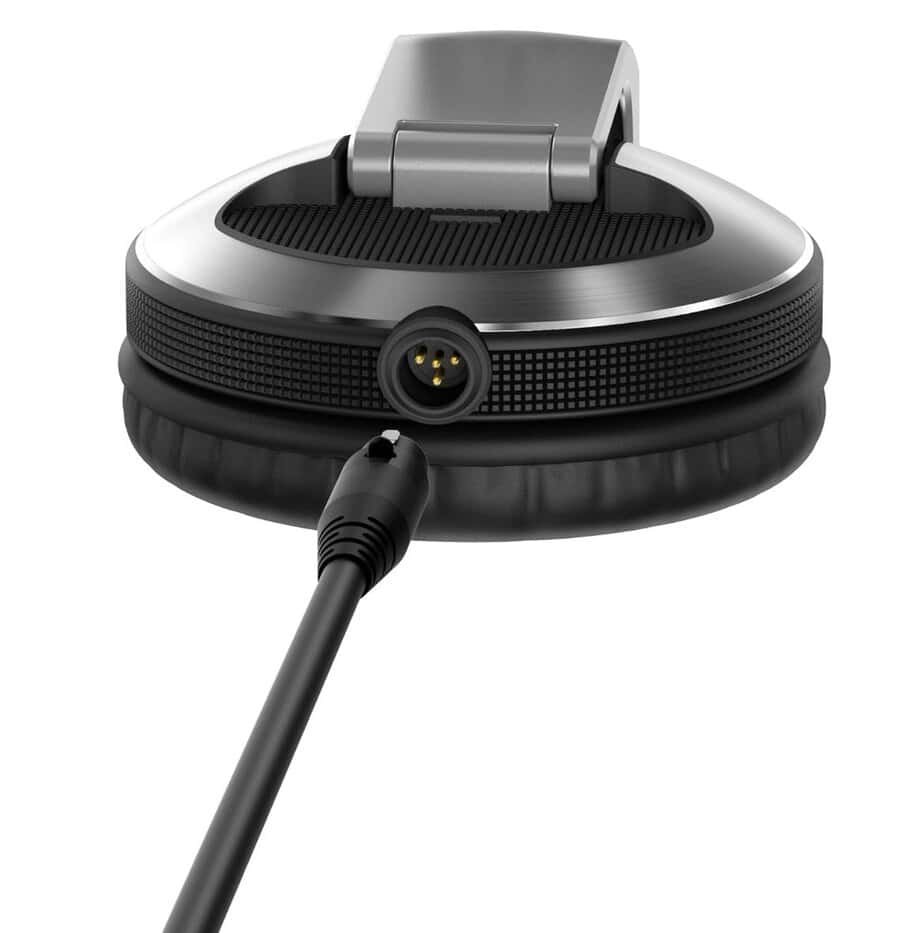
Pioneer ships these with two cables: a 1.2m coiled cable that extends to 3m (the standard DJ choice — stays out of the way, enough length to reach the mixer) and a 1.6m straight cable for home use. A hard carry case and 6.3mm adapter are included. The carry case in particular is worth noting — it’s a proper hard shell, not the flimsy zip pouch you get with cheaper headphones.
The nanocoating on the ear pads and headband is one of those features that sounds gimmicky until you’ve had a pair of headphones destroyed by sweat over two summers of summer festival touring. The coating genuinely extends the life of the pads — and when they do eventually wear, the ear pads are user-replaceable, which keeps running costs down over time.
“The carry case is a proper hard shell, not a flimsy zip pouch. The nanocoating on ear pads and headband isn’t gimmicky — it’s the difference between headphones that last three years and ones that last ten.”
Sound: what 5Hz to 40kHz actually means in practice
Pioneer’s headline claim for the HDJ-X10 is that they’re the world’s first DJ headphones to reproduce high-resolution sound from 5Hz to 40kHz. It’s a striking spec. In practice, what it translates to is a headphone with exceptional extension at both ends — deep, controlled sub-bass that doesn’t flap, and highs that stay crisp and airy rather than rolling off into mush.
The 50mm drivers are large for a headphone in this class, and the bass response is the HDJ-X10’s most immediately noticeable quality. It’s strong, punchy, and club-friendly. Electronic music sounds the way it should — kicks hit hard, sub-bass sits firmly in the mix, and the low end doesn’t bleed into the mids the way cheaper headphones can. This is a sound profile tuned for the booth, not the living room.
The mids are clear and present without being harsh. Vocals cut through, synth leads sit where they should, and the overall mix is easy to read. The highs are bright and detailed — some listeners might find them slightly forward on certain material, but in a loud environment with a monitor system pumping, that extra clarity is exactly what you need to hear your mix properly.
Isolation is excellent. The closed-back design with a good seal from the ear pads keeps external noise where it belongs, which is important when you’re trying to cue a track over a loud PA. In a loud club environment, the HDJ-X10 gives you enough isolation to work cleanly without having to crank the headphone volume to compensate.
For the record: this is not a headphone for people who want a natural, relaxed sound. The HDJ-X10’s tuning is deliberate and optimised. If you’re mixing hip-hop, house, techno, or open-format electronic music in a booth, it’s ideal. If you’re listening to acoustic jazz at home and want a natural presentation, it’s not the tool for the job.
Comfort: long sessions, real-world use
Comfort for DJ headphones is a different requirement than comfort for audiophile listening. You’re not sitting still — you’re bending, leaning, moving, one ear on one ear off. The HDJ-X10 handles this well.
The headband padding is adequate without being excessive, and the clamping force is firm enough to stay in place without becoming uncomfortable over a long set. Reviewers consistently report being able to wear these for extended sessions — four, five, six hours — without the fatigue you’d get from a tighter-clamping headphone.
The 328g weight is something to note. Coming from lighter headphones it’s noticeable, but it quickly becomes normal. The weight is a byproduct of the metal construction, and most working DJs will take the trade-off without hesitation.
How the HDJ-X10 compares to the rest of the Pioneer range
Pioneer’s HDJ-X range forms a clear hierarchy, and understanding where the X10 sits helps justify the price.
| Model | Level | Freq. Response | Driver | Key difference |
|---|---|---|---|---|
| HDJ-CUE1 | Entry | 5Hz – 30kHz | 40mm | Budget-friendly starter |
| HDJ-X5 | Mid | 5Hz – 30kHz | 40mm | Working DJ staple |
| HDJ-X7 | Upper mid | 5Hz – 35kHz | 50mm | Strong all-rounder |
| HDJ-X10 | Flagship | 5Hz – 40kHz | 50mm | Best build, best extension |
The step from the HDJ-X7 to the HDJ-X10 is the most debated in the range. Both use 50mm drivers. Both are competent working DJ headphones. The X10 extends further at the top (40kHz vs 35kHz), uses more premium materials throughout, has the nanocoating the X7 doesn’t, and has a noticeably more refined build quality. Whether that’s worth the price difference depends on how seriously you take your gear and how much punishment it’s going to take.
For DJs who play regularly and want headphones they won’t replace for years, the X10 is the obvious choice. For DJs who play occasionally or are just starting out, the X7 is genuinely excellent and saves meaningful money.
Pros and cons
- Exceptional build quality — metal-reinforced, genuinely tour-ready
- Strong, punchy club-friendly sound with excellent bass extension
- Wide 5Hz–40kHz frequency response
- Nanocoating resists sweat and dirt — extends lifespan significantly
- Replaceable ear pads keep long-term running costs down
- Both coiled and straight cables included
- Hard carry case in the box
- Excellent isolation for booth use
- Premium price — hard to justify for casual or occasional DJs
- Coloured sound signature — not suited for studio reference monitoring
- 328g weight noticeable if you’re used to lighter headphones
- Diminishing returns vs the HDJ-X7 for some users
Specifications
| Driver size | 50mm |
| Frequency response | 5Hz – 40,000Hz |
| Impedance | 32 ohms |
| Sensitivity | 106 dB |
| Max input power | 3,500 mW |
| Weight | 328g (without cable) |
| Cables included | 1.2m coiled (extends to 3m) + 1.6m straight |
| Accessories | Hard carry case, 6.3mm adapter |
| Design | Closed-back, foldable, swivelling earcups |
| Special features | Nanocoating on ear pads and headband, replaceable ear pads |
| Launch price | £299 / $349.99 |
Verdict: still the benchmark in 2026
The Pioneer HDJ-X10 have been at the top of the working DJ headphone conversation for years, and they remain there. Competitors have closed the gap — Audio-Technica, Sennheiser, and V-Moda all make strong headphones at similar price points — but the X10’s combination of build quality, sound tuning, and real-world durability features (nanocoating, replaceable pads, hard case) keeps them ahead for serious working DJs.
The sound is exactly what club DJs need: punchy, detailed, loud, and clear enough to mix accurately over a PA. The build is exactly what touring DJs need: metal-reinforced, sweat-resistant, and designed to survive years of regular use. The spec sheet is impressive, but it’s the real-world durability that earns the price.
If you’re a working DJ who plays regularly and wants headphones you’ll still be using in five years, the HDJ-X10 is the buy. If you play occasionally or are on a budget, step down to the X7 — it’s excellent. But if you’re serious about the craft, the flagship is worth it.
The benchmark working DJ headphone. Punchy, detailed, and built to last. The nanocoating, replaceable pads, and metal construction justify the flagship price for any DJ who plays regularly. Not for studio monitoring or casual listeners — built specifically for the booth, and exceptional at it.
The Amazon link above is an affiliate link. If you buy through it, we earn a small commission at no extra cost to you. It doesn’t influence what we write — see our full affiliate disclosure for details.