Weird & Wonderful Gear · A new series
Our favourite weird gear.
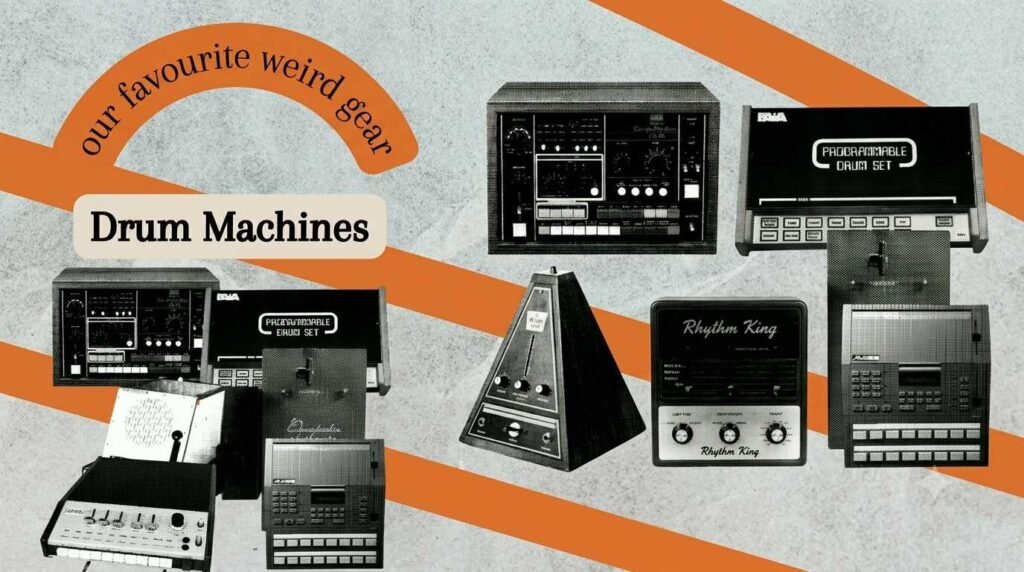
Before the 808, there was a century of strange, clunky, wonderful machines trying to fake a drummer. These are the ones we love most.
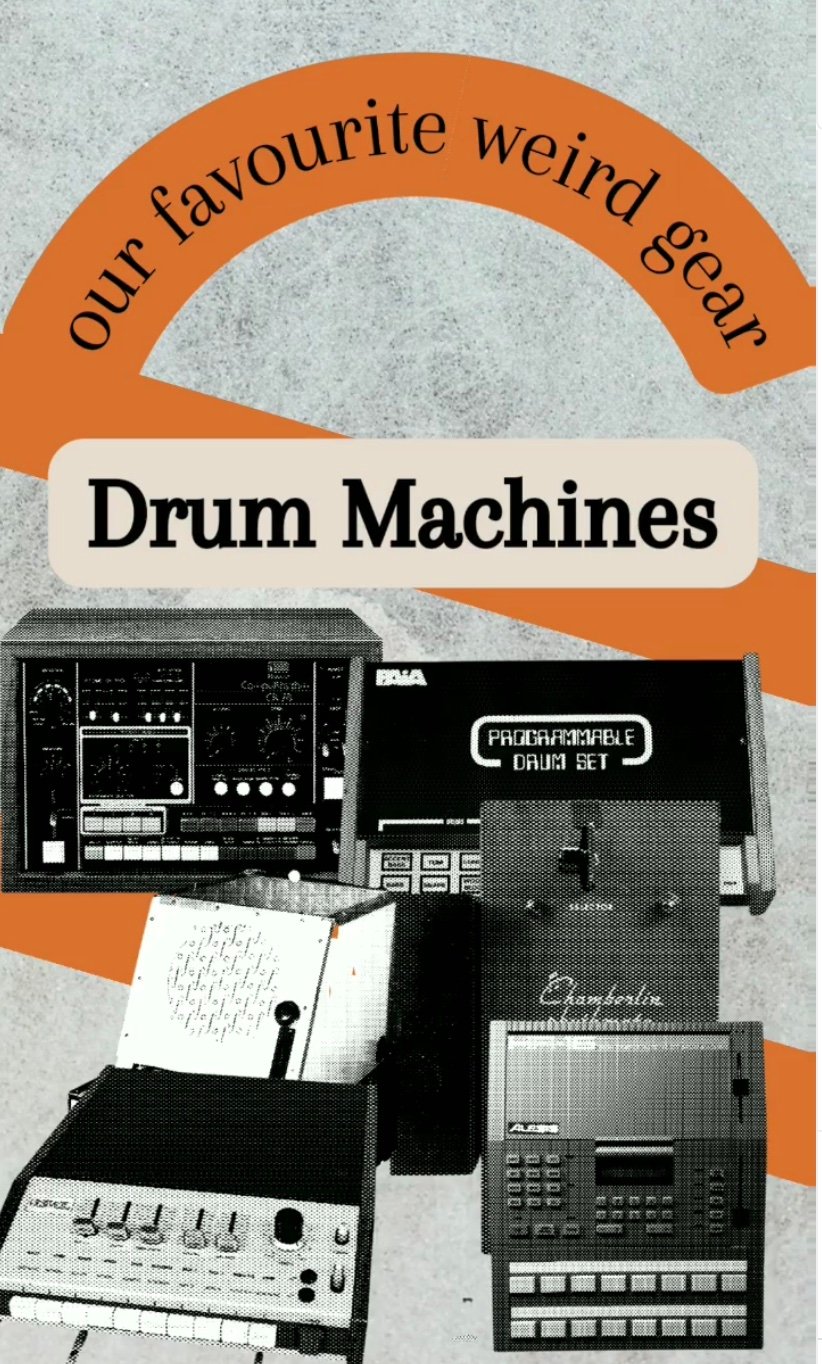
Welcome to Weird & Wonderful Gear — an occasional series about the odd, obsolete and quietly influential machines that shaped how music actually sounds. Not buyer’s guides, not spec sheets. Just gear we find genuinely fascinating, told properly. We’re starting where a lot of modern music started: with the long, strange struggle to build a drummer out of tubes, tape, light and ringing circuits.
It began as an Instagram reel — a handful of machines, no narration, just the sounds they make. Enough people asked about them that they deserved the full write-up. Here it is.
▶ Watch the drum machines reel on Instagram →Where it actually began
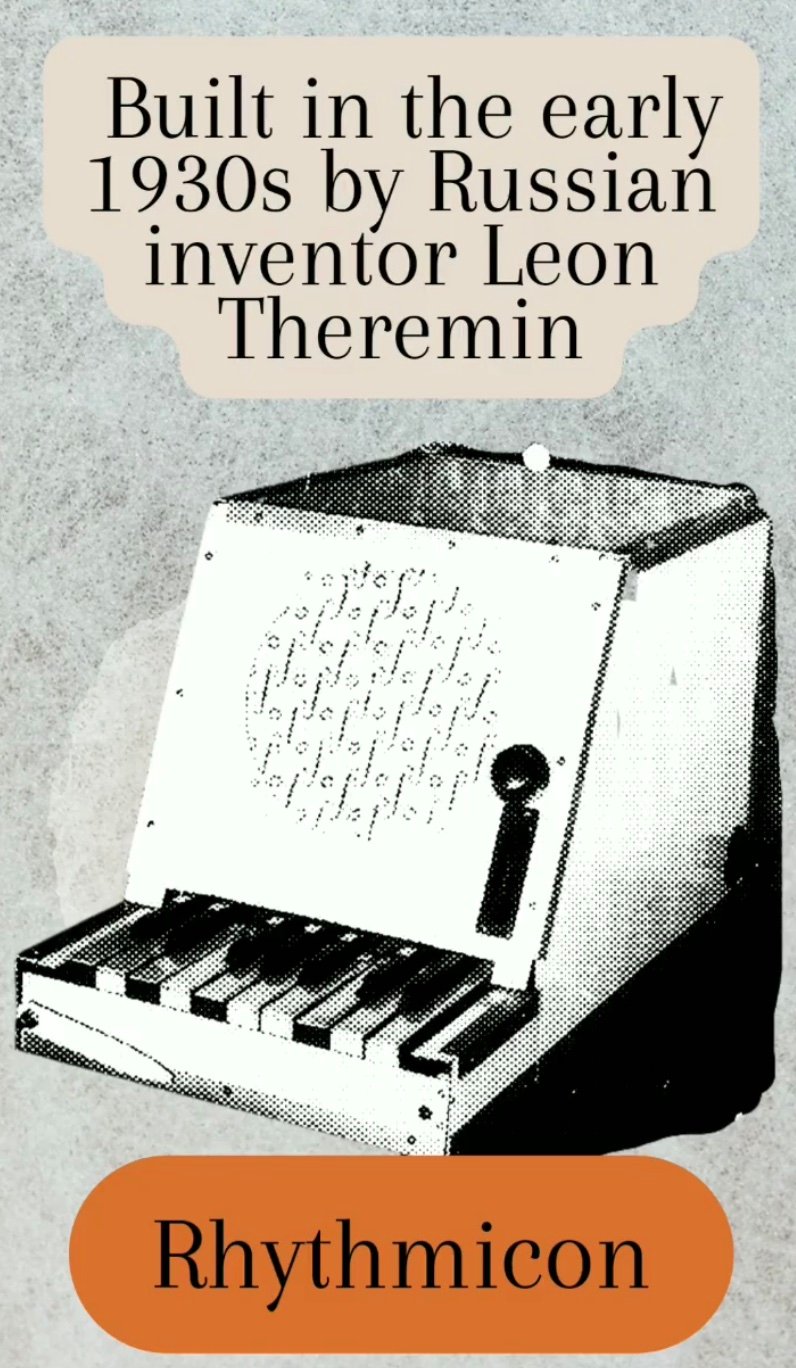
You’ll often see the first drum machine dated to the 1940s or ’50s — but the honour really belongs to a bizarre contraption from 1931. The Rhythmicon, built by Léon Theremin (yes, that Theremin) for the American composer Henry Cowell, is widely regarded as the first electronic rhythm machine. It generated patterns by shining light through spinning perforated discs onto photoelectric sensors — a mechanism closer to early television than to anything in a modern booth. Only three were ever made, and by most accounts it sounded less like drums than something between a grunt and a snort. A commercial dead end and a conceptual leap at the same time — which turns out to be the theme of everything that followed.
Rhythmicon
Theremin’s photoelectric oddity could play multiple cross-rhythms at once, each tied to a pitch — a concept so far ahead of its time that nobody quite knew what to do with it. Cowell used it in a few compositions; then it vanished into obscurity for decades. It’s less a drum machine than the strange ancestor of every drum machine.
Why we love it · The 1931 machine that was too clever for its own century
The machines
Chamberlin Rhythmate
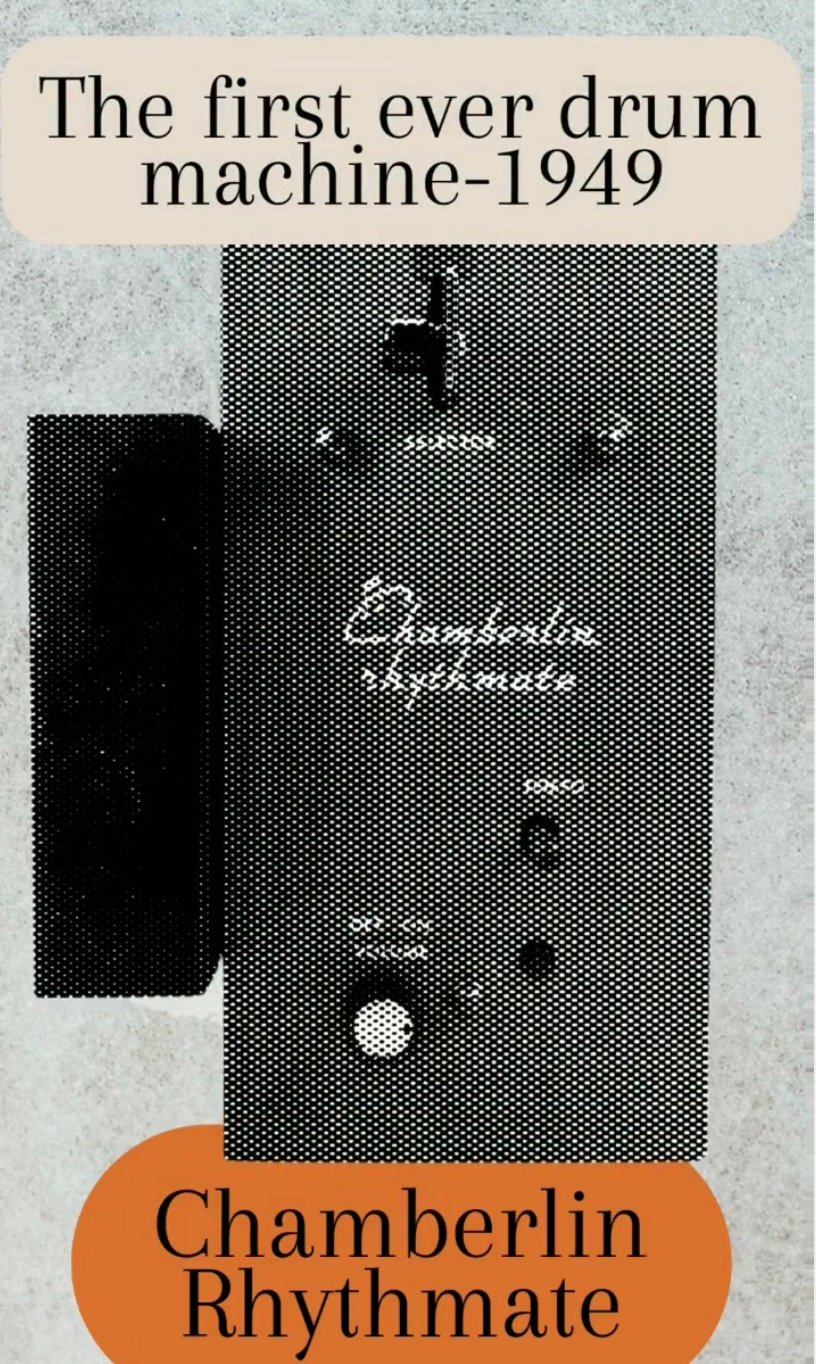
Harry Chamberlin’s home invention didn’t synthesise drums — it played back real ones, recorded onto loops of tape and triggered on demand. It’s the same idea that would later become the Mellotron, and it’s why the Rhythmate feels warmer and stranger than the electronic boxes that followed.
A genuine missing link between the tape recorder and the rhythm machine — decades before anyone used the word “sample”.
Why we love it · Real drums on tape, long before “samples” existed
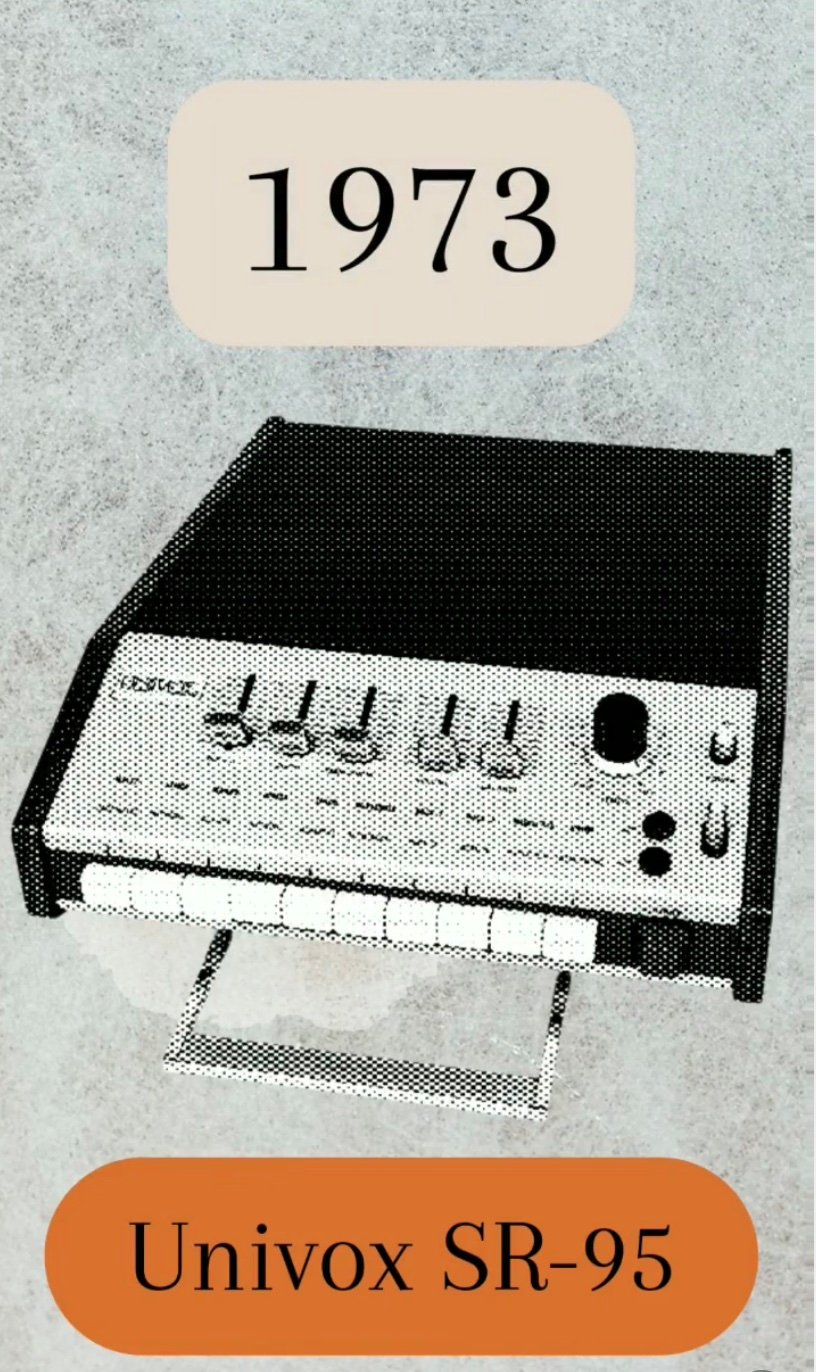
Univox SR-95
A rebadged Korg (Keio) Mini Pops 7 — a design dating to the late 1960s — sold under the Univox name. A humble preset box of bossa novas and cha-chas that became quietly legendary. Jean-Michel Jarre built much of Oxygene on its Mini Pops sibling by layering presets it was never meant to combine; you can hear the same family of sounds on REM’s “Everybody Hurts” and across Beck’s Odelay.
Why we love it · A preset “toy” that ended up on landmark records
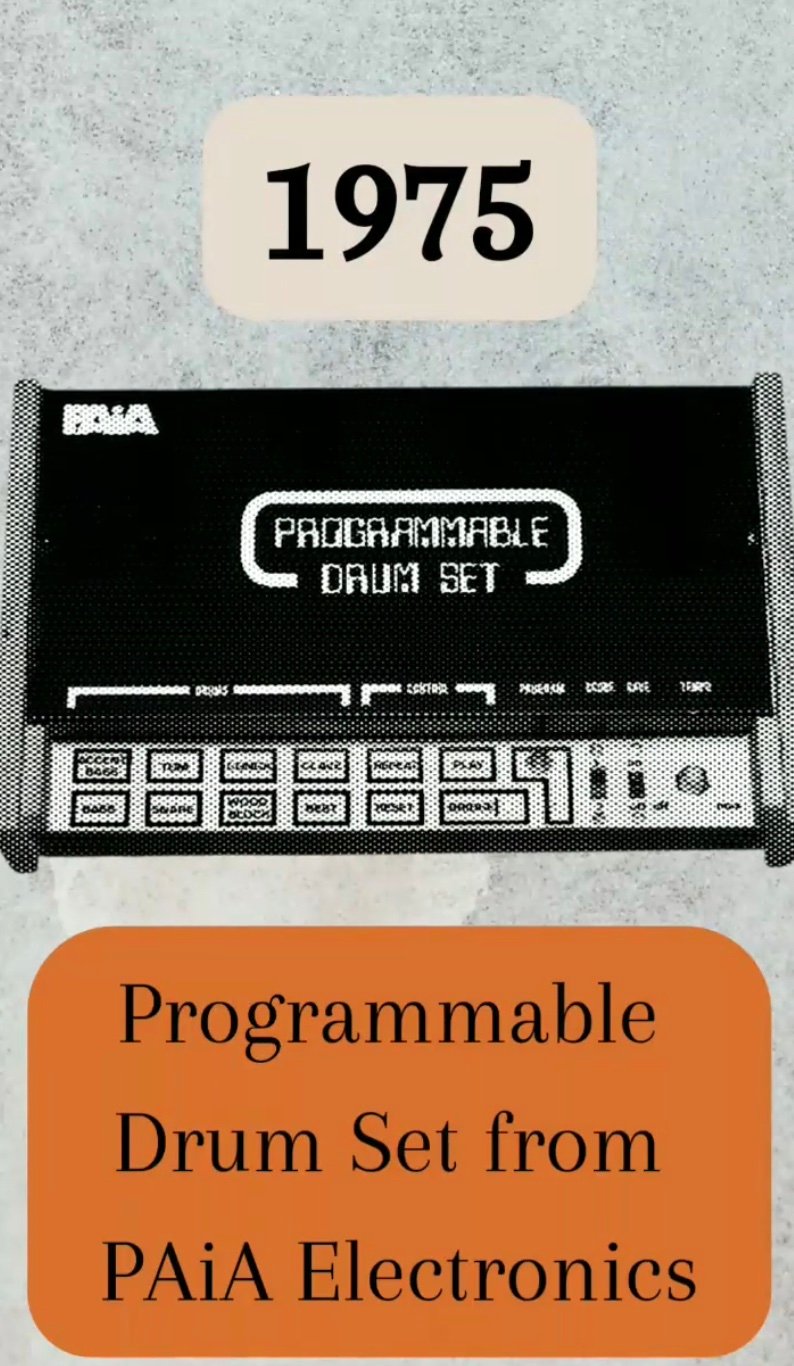
PAiA Programmable Drum Set
Sold as a build-it-yourself kit by a small Oklahoma outfit, the PAiA has as strong a claim as anything to being the first standalone and first programmable drum machine — three years before the CR-78. It made its sounds with “ringing oscillators” rather than samples, giving it a pure, quirky, slightly unreal tone.
Peter Gabriel fell for one in the late ’70s and built the rhythms of Melt around it — “Biko” included. He later admitted the sounds were rough, but the freedom to program his own patterns changed how he wrote. That’s the whole story of weird gear in one anecdote.
Why we love it · A DIY kit that quietly invented programmable drums
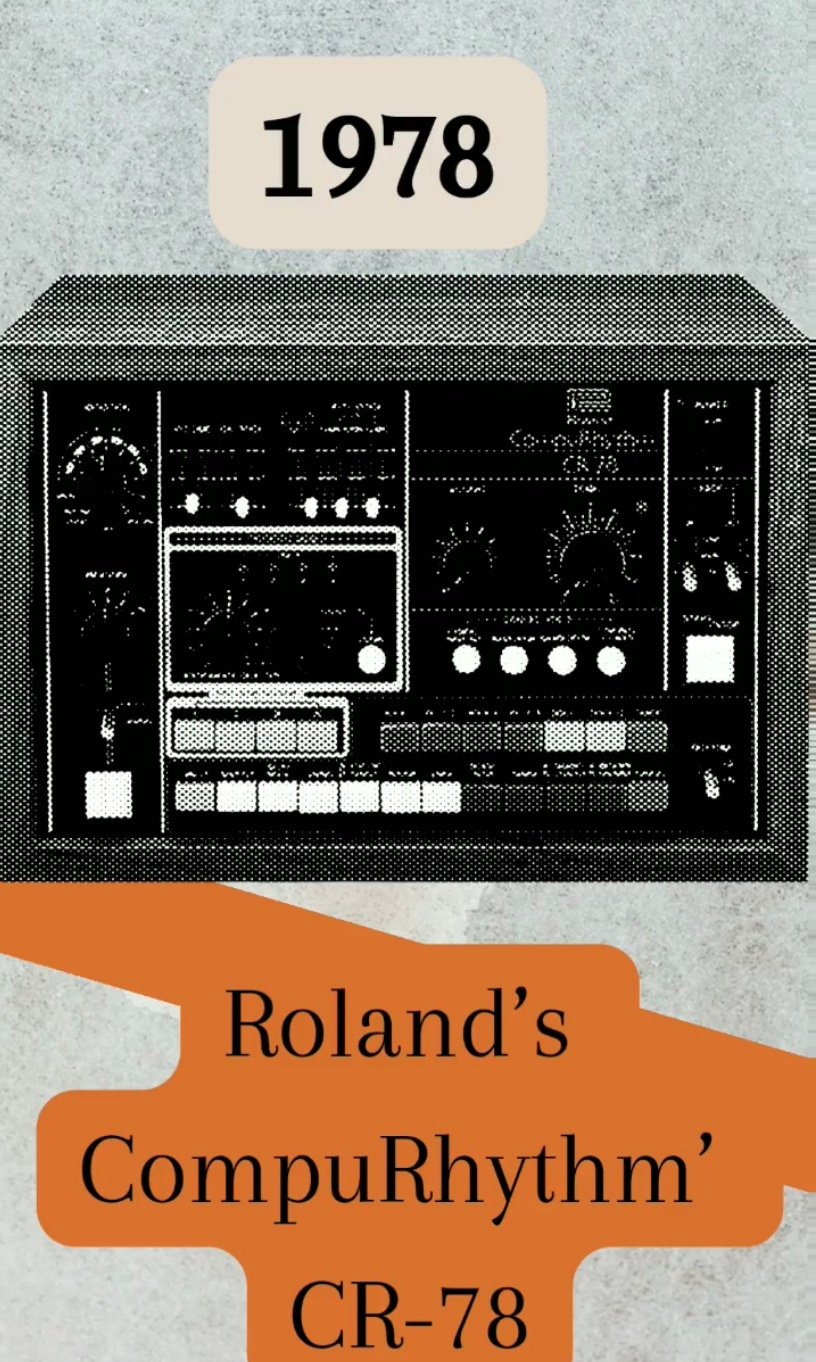
Roland CR-78 CompuRhythm
The one that changed everything without meaning to. The CR-78 was the first drum machine built around a microprocessor, which made programming and saving your own patterns genuinely usable rather than a soldering project. Its slightly plasticky, hypnotic sound defines a run of untouchable records — Blondie’s “Heart of Glass,” Phil Collins’ “In the Air Tonight,” Gary Numan’s “Cars.”
Where the PAiA proved you could program drums, the CR-78 made it something a working musician actually would. The bridge between the preset era and everything after.
Why we love it · Where drum machines stopped imitating and started inspiring
Get the CR-78 as a plugin · Check price →And the ones everyone knows
- Wurlitzer Sideman (1959) — the first commercially produced drum machine; a wooden cabinet of tubes and a spinning disc, built to back organists. The Musicians’ Union reportedly hated it.
- Ace Tone Rhythm Ace (1967) — Ikutaro Kakehashi’s transistor rhythm box, the seed of what became Roland.
- Roland TR-808 (1980) — a commercial flop that bedroom producers turned into the most influential drum machine ever made.
- LinnDrum LM-1 (1980) — the first to use digital samples of real drums; all over Prince’s catalogue.
- Roland TR-909 (1983) — MIDI, part-sampled, and the literal engine of house and techno.
- Alesis HR-16 (1987) — 16-bit sampled drums at a price bedrooms could finally afford; the great democratiser.
Line them all up and a pattern emerges: nearly every one of these machines was misunderstood, undersold or written off in its own time — and then someone heard it differently. The “failures” became foundations. That’s the quiet joy of digging into weird old gear.
Hear them today (without the auction prices)
You can’t realistically own a working Rhythmicon, and a clean Mini Pops now goes for silly money. The good news: nearly all of these sounds have been faithfully sampled and emulated, so you can fold a bit of this history into your own tracks for the price of a plugin.
And for the Univox/Mini Pops sound specifically, there’s a superb free emulation — Full Bucket Music’s “Bucket Pops” — if you want that Oxygene shimmer without spending a penny. More options in our guide to the best sample packs and plugins for DJs and producers.
The series · what’s next
More weird & wonderful gear incoming
This is edition one. The plan is to keep digging into the strange corners of music-making hardware — the machines that were too odd, too early, or too cheap to be taken seriously, and turned out to matter anyway.
Edition 02 is live — 10 Soviet synths that sound like nothing else →