
Loopcloud Guide · 2026
What Is Loopcloud?
Loopcloud explained for DJs and producers
A practical guide to how Loopcloud works, what it does, and who it’s actually for — covering the sample library, DAW connection, cloud storage, editor, and subscription tiers.
Quick answer: Loopcloud is a sample library, cloud storage system, and music-making app that lets you search, preview, edit, and drop sounds into your DAW in time and key. It is built on the Loopmasters catalogue — over 5 million sounds — and designed to speed up sample hunting without breaking your production flow.
Loopcloud sits between a sample store and a creative workflow tool. You can use it to find sounds from the Loopmasters catalogue, organise your own library, and audition everything inside a synced environment before dragging it into your project.
For DJs and producers, the real appeal is speed. Instead of jumping between browser tabs, folders, and downloads, Loopcloud keeps the whole hunt-and-build process inside one place — connected to your DAW and always in tempo and key.
How Loopcloud works
Loopcloud’s core idea is simple: search, preview, edit, export. The app connects to your DAW via the Sync plugin, lets you preview sounds in time and key, and provides an editor where you can chop, layer, and tweak samples before sending them into a session. It also analyses your own sample library and auto-tags it, so your personal folders and Loopmasters sounds live in the same searchable space.
Search and preview
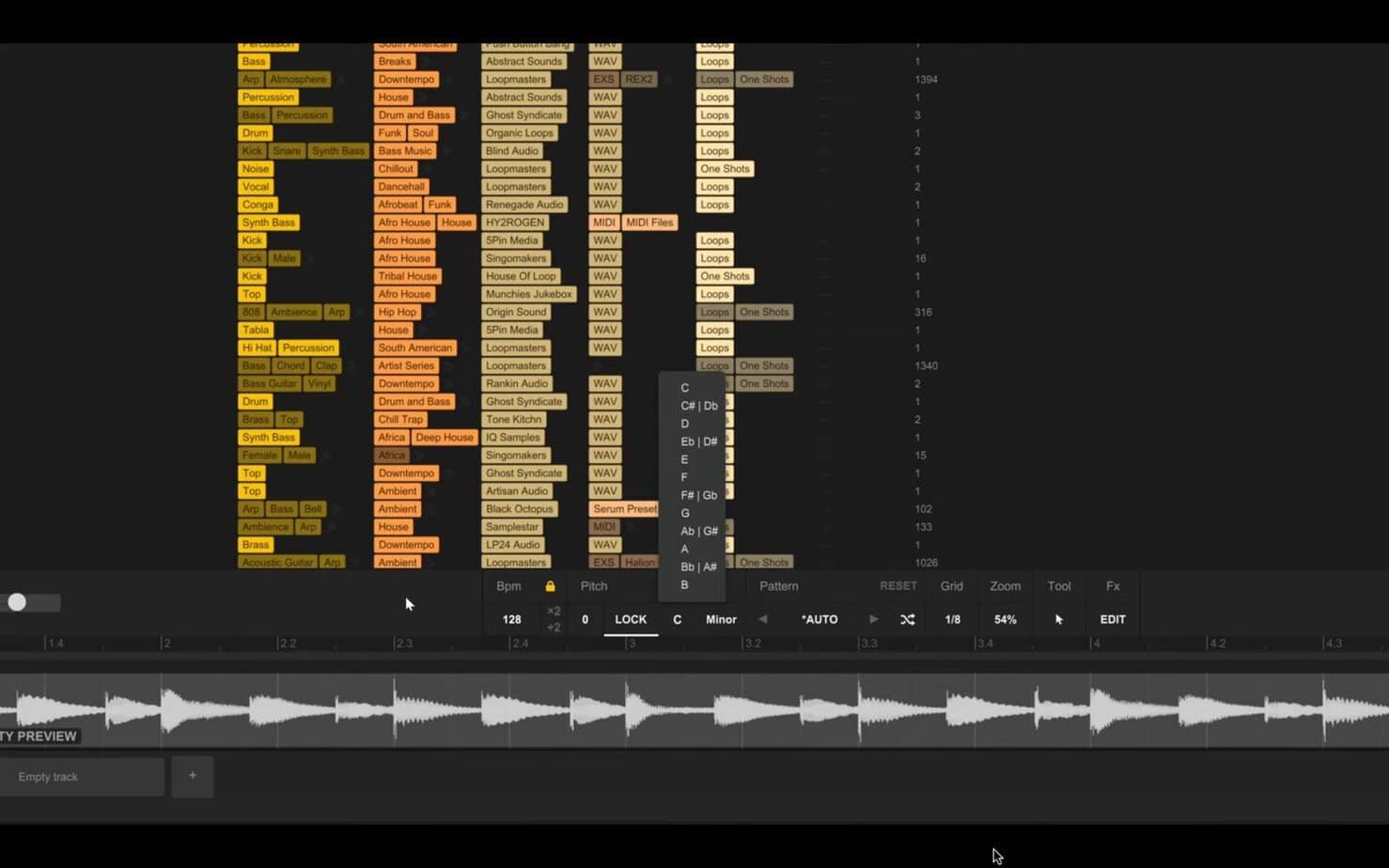
Loopcloud lets you browse by instrument, genre, label, key, BPM, and more. Its AI search and intelligent tagging are designed to get you to the right sound faster, without needing to remember where everything lives. Harmonic and rhythmic matching mean you can find sounds that actually complement what’s already in your session, rather than just returning generic alternatives.
DAW sync
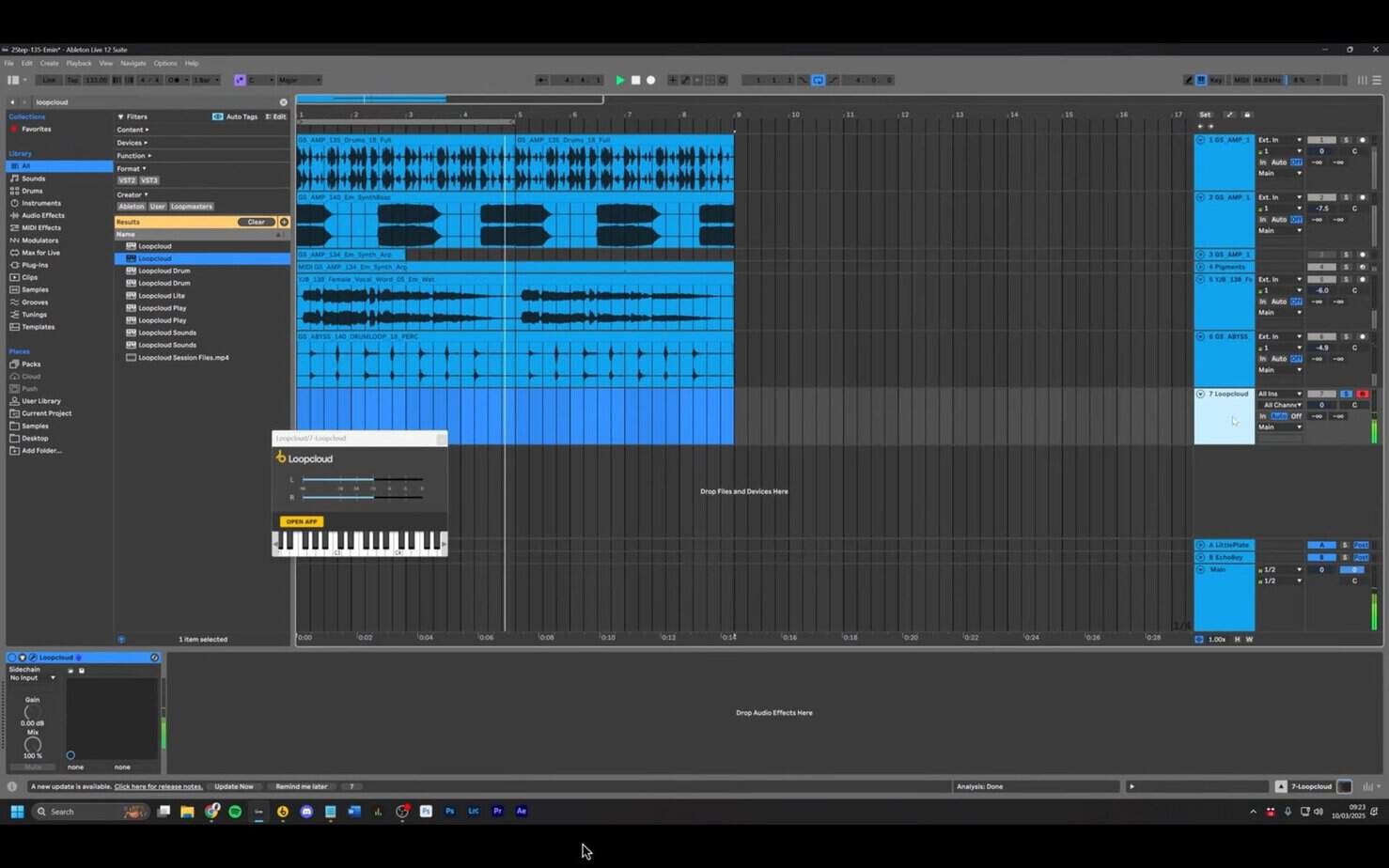
The Sync plugin keeps sounds aligned with your project so you can audition samples in tempo and key, then drag single files, stems, or mixdowns directly into your DAW. This is the feature that separates Loopcloud from just browsing a folder — everything you hear is already locked to your session before it arrives in the timeline.
Edit and flip
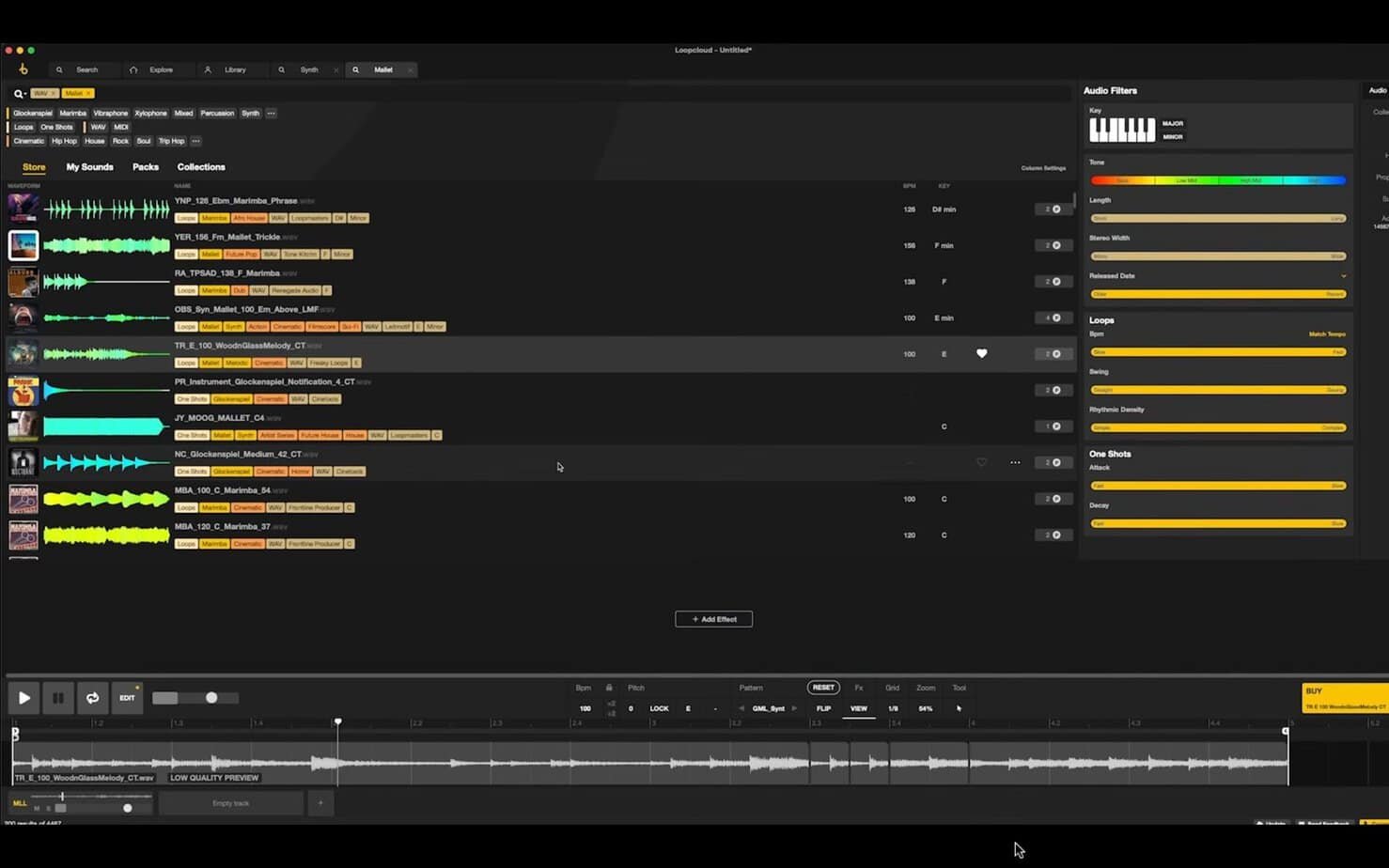
Loopcloud includes an editor and pattern tools that let you flip, slice, and reshape samples before they ever reach your DAW. The DRUM and PLAY instruments are also available inside the app, which means you can sketch a rough arrangement and test how sounds work together without opening a separate plugin.
What you get — plans and pricing
Loopcloud subscriptions come with access to over 5 million sounds, cloud storage, the Sync plugin, the Sounds plugin, and the DRUM and PLAY instruments. Each plan also includes monthly points used to download sounds, presets, and plugin expansions outright.
| Plan | Monthly | Annual | Storage | Best for |
|---|---|---|---|---|
| Artist | $7.99 | $79.99 | 5 GB | Occasional producers, hobbyists |
| Studio | $11.99 | $119.99 | 50 GB | Regular producers, growing libraries |
| Professional | $21.99 | $219.99 | 250 GB | Working producers, large collections |
For most working producers, Studio is the practical entry point — 50GB covers a substantial sample library, and the annual rate works out cheaper than two months of a Splice equivalent. If you’re comparing Loopcloud directly against Splice or other subscription services, see the full Loopcloud vs Splice vs Noiiz comparison.
Check Loopcloud plansWhy DJs and producers use it
Find samples faster. Search by key, BPM, genre, and label across 5 million sounds, then preview everything in context before committing to a download.
Stay in flow. Audition, edit, and export without leaving your DAW environment. The Sync plugin keeps everything locked to your session tempo and key automatically.
Organise a messy library. Loopcloud analyses and auto-tags your own sample folders so your personal collection becomes searchable alongside the Loopmasters catalogue.
Sketch ideas quickly. The built-in editor, DRUM instrument, and pattern tools let you test combinations and rough out arrangements before anything reaches your timeline.
The Loopcloud collection
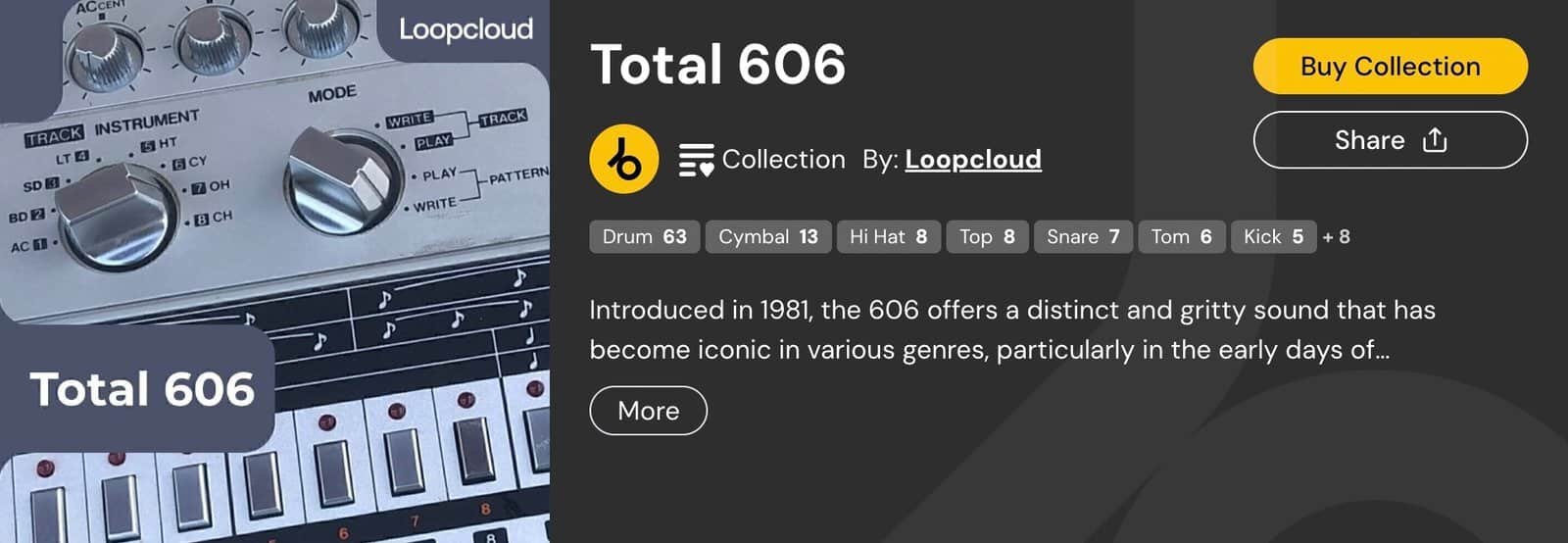
The catalogue is a big part of the value. Built on the Loopmasters library, Loopcloud gives you access to millions of samples alongside MIDI files, synth presets, and curated Collections — saved groups of sounds organised by project, vibe, instrument, or label. For working producers, that last feature matters: a good sample library isn’t just about volume, it’s about being able to return to a consistent palette without losing time rediscovering things.
The library is designed to be explored rather than just searched. Curated packs, artist collections, and editorial picks sit alongside the full catalogue, which means you can start from a recommendation rather than a blank search every time.
Loopcloud vs other sample platforms
Loopcloud is not the only subscription sample service worth knowing. Splice is the main alternative for many producers, and Noiiz occupies a similar space with its own catalogue and workflow. The key differences come down to library curation, DAW integration depth, and whether you prefer a credits-based download model or unlimited streaming within the app.
The full comparison — covering Loopcloud, Splice, and Noiiz side by side on pricing, library depth, and workflow fit — is in the sample platform comparison post.
Is Loopcloud worth it?
If you hunt for loops, one-shots, MIDI, or preset content on a regular basis, Loopcloud can meaningfully speed up that process and keep your library more organised. If you only need the occasional sound, the value depends on how much you’ll actually use the editor, cloud storage, and subscription extras.
The honest take: Loopcloud makes the most sense when sample search is part of your regular workflow, not an occasional task. At the Studio tier ($11.99/month or $119.99 annual), the cost is comparable to a single mid-range sample pack per month — and you get access to far more material alongside the workflow tools.
For a closer look at how the platform has evolved, see the Loopcloud feature updates post covering the changes introduced across recent versions — including the AI search improvements, new effects, and expanded instrument toolkit.
Final thoughts
Loopcloud is a faster way to move from “I need a sound” to “I’ve built something.” If you work with samples regularly, it gives you a clean environment to search, audition, edit, and organise without killing momentum — and the DAW sync means everything you find is already in the right key and tempo before it hits your session.
Think of it not as a replacement for your DAW, but as the layer between your DAW and the rest of the internet’s sample catalogue — one that handles the hunting so you can focus on the building.
Try Loopcloud★ A note on links: some links in this post are affiliate links. If you buy through them we earn a small commission at no extra cost to you — it helps fund the site. See our full disclosure.