The right pair of DJ headphones depends entirely on where and how you play. The club-booth standard has been the same for decades — but there’s a different answer if you’re DJing at home, producing as well as playing, or just starting out. This guide cuts through the noise by matching each pair to the DJ who’ll actually get the most out of it.
Six models. All price points. No padding.
Top Pick — Sennheiser HD 25
The global club-booth standard. Lightweight, indestructible, and built for one-ear cueing in loud rooms. If you play out regularly, this is the benchmark everything else is measured against.
Check Prices →Best DJ Headphones by Use Case
Before getting into individual models, here’s the short version. DJ headphones aren’t the same as studio headphones — they prioritise isolation, durability, portability, and one-ear cueing over a flat, neutral response. But that doesn’t mean studio headphones can’t work for DJing. It depends on your workflow.
Quick finder: Playing clubs → HD 25. Premium booth upgrade → HDJ-X10. Home DJ + some production → ATH-M50x. Producer who also DJs → DT 770 Pro 80Ω. Just starting out → HDJ-CUE1. Tight budget, pro-style build → HDJ-CX.
Club & Booth DJs
Sennheiser HD 25
Best for: Club DJs & Booth Work
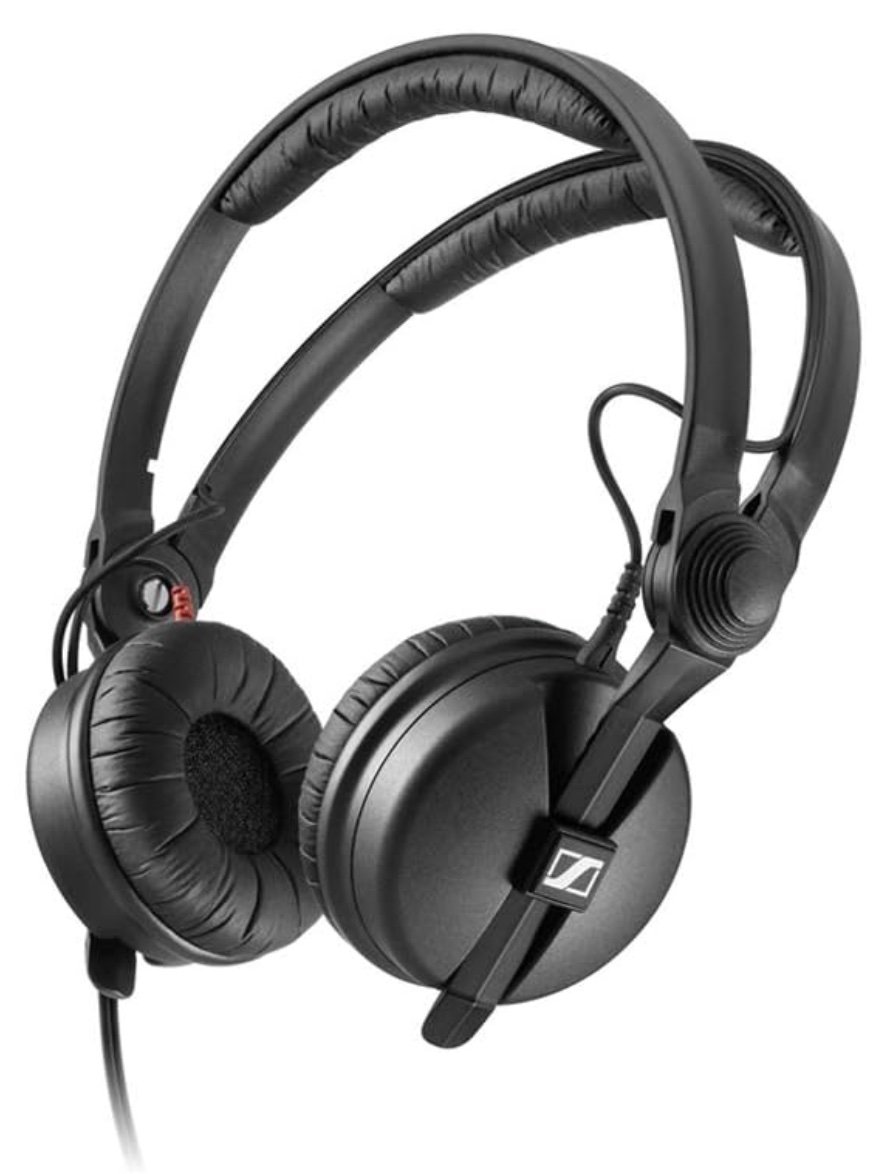
Driver: 50mm | Freq response: 16–22,000 Hz | Impedance: 70Ω
SPL: 120 dB | Weight: 140g | Foldable: Yes | Single-ear monitoring: Yes
Cable: Detachable coiled + straight
The HD 25 has been the default club-booth headphone for over thirty years. Walk into a DJ booth almost anywhere in the world and there’s a strong chance you’ll find a pair. That reputation isn’t nostalgia — it’s earned.
What makes them work in a booth is the combination of things other headphones struggle to get right simultaneously: they’re light enough to wear one-ear for an entire set without neck strain, the passive isolation is exceptional for an on-ear design, and they’re built to take punishment. The split headband distributes clamping force evenly and makes them almost impossible to snap.
The sound is coloured — boosted low-end, controlled mids — which is exactly what you want when you’re cueing over a pounding club PA. They’re not for critical listening. They’re for working.
Pros
- Global booth standard
- Exceptional isolation for an on-ear design
- Extremely lightweight at 140g
- Fully modular — every part replaceable
- Survives years of abuse
Cons
- On-ear fit divides opinion
- Not comfortable for long studio sessions
- Coloured sound — not for mixing or mastering
Premium Booth Upgrade
Pioneer DJ HDJ-X10
Best for: Professional DJs who want over-ear comfort
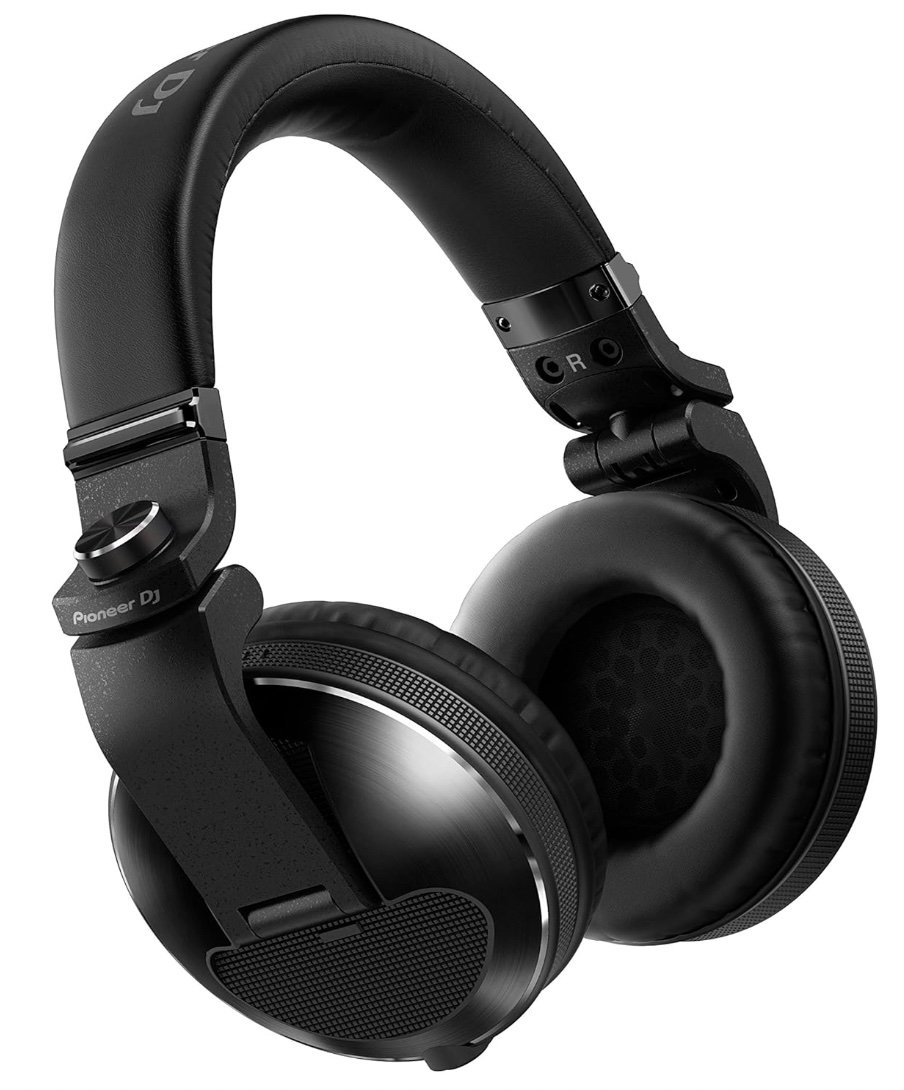
Driver: 50mm | Freq response: 5–40,000 Hz | Impedance: 32Ω
SPL: 106 dB | Weight: 332g | Foldable: Yes (fold-flat) | Single-ear monitoring: Yes
Cable: Detachable coiled + straight
The HDJ-X10 is Pioneer’s flagship DJ headphone and the most credible modern alternative to the HD 25 at the top of the market. Where the Sennheiser is minimal and on-ear, the X10 is a full over-ear design — more isolating, more comfortable for extended sessions, and built with touring DJs in mind.
The 5–40,000 Hz frequency range is wider than you’ll ever need, but the practically useful part is the deep bass extension and strong isolation. In a loud booth these perform exceptionally. The fold-flat mechanism is robust, the swivel cups handle one-ear monitoring well, and the build quality justifies the price point.
The main trade-off versus the HD 25 is weight — at 332g they’re more than double. For some DJs that’s irrelevant; for others it matters across a four-hour set. If you’re considering committing at this price, the full HDJ-X10 review is worth reading first.
Pros
- Exceptional passive isolation
- Over-ear comfort for long sets
- Robust fold-flat design
- Strong bass response for booth cueing
- Low 32Ω impedance — easy to drive
Cons
- Heavy at 332g
- Premium price
- Not the universal booth standard the HD 25 is
Home DJs & Hybrid Use
Audio-Technica ATH-M50x
Best for: Home DJs & DJ/Producer crossover
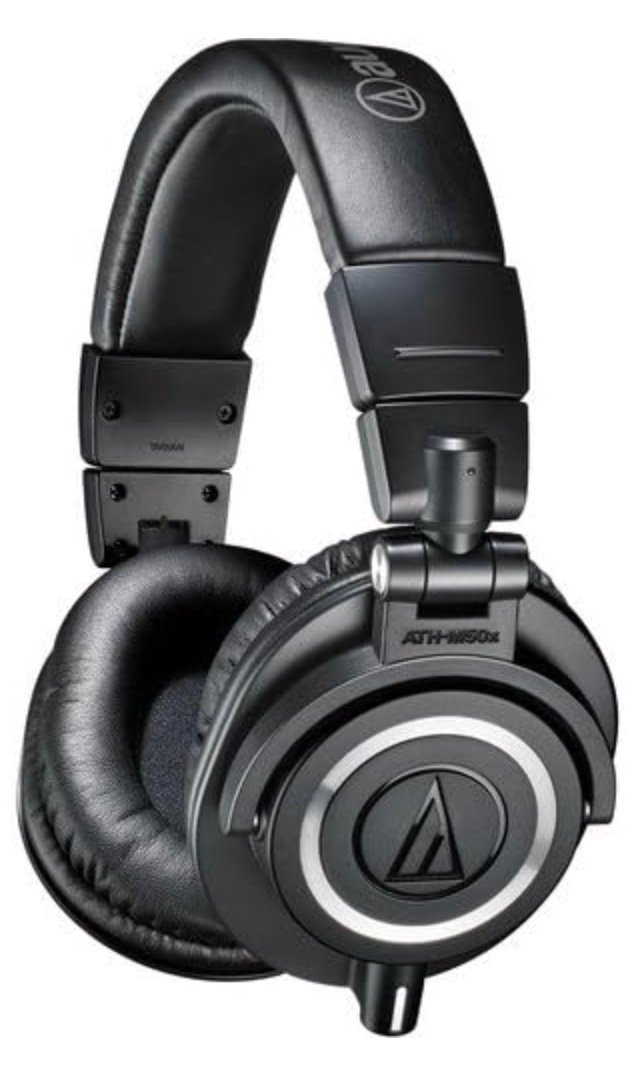
Driver: 45mm | Freq response: 15–28,000 Hz | Impedance: 38Ω
SPL: 99 dB | Weight: 285g | Foldable: Yes | Single-ear monitoring: Yes
Cable: 3 detachable cables included (coiled, straight long, straight short)
The ATH-M50x isn’t a DJ headphone. It’s a studio monitor headphone that has become the default recommendation for anyone who DJs at home and also produces, edits, or records. That crossover is where it earns its place in this guide.
The sound profile is more neutral than either the HD 25 or HDJ-X10 — tighter bass, more accurate mids, better high-end detail. For bedroom DJing where you’re not competing with a club PA, that’s actually an advantage: you hear your mix more clearly. It also means you can use the same pair for producing without switching headphones.
The limitations are real though. In a loud booth, the neutral tuning makes cueing harder. The single-ear monitoring works but the swivel mechanism isn’t as DJ-optimised as Pioneer’s. If you play out regularly, the HD 25 is a better tool. If you mostly play at home and also make music, the M50x earns its keep.
Pros
- Neutral, accurate sound
- Excellent for home DJing and production
- Three cables included
- Comfortable over-ear fit
- Strong value at mid-range price
Cons
- Not optimised for loud booth cueing
- One-ear monitoring less natural than DJ-specific designs
- Not a pure DJ headphone
Producers Who DJ
Beyerdynamic DT 770 Pro 80Ω
Best for: Producers who also DJ at home
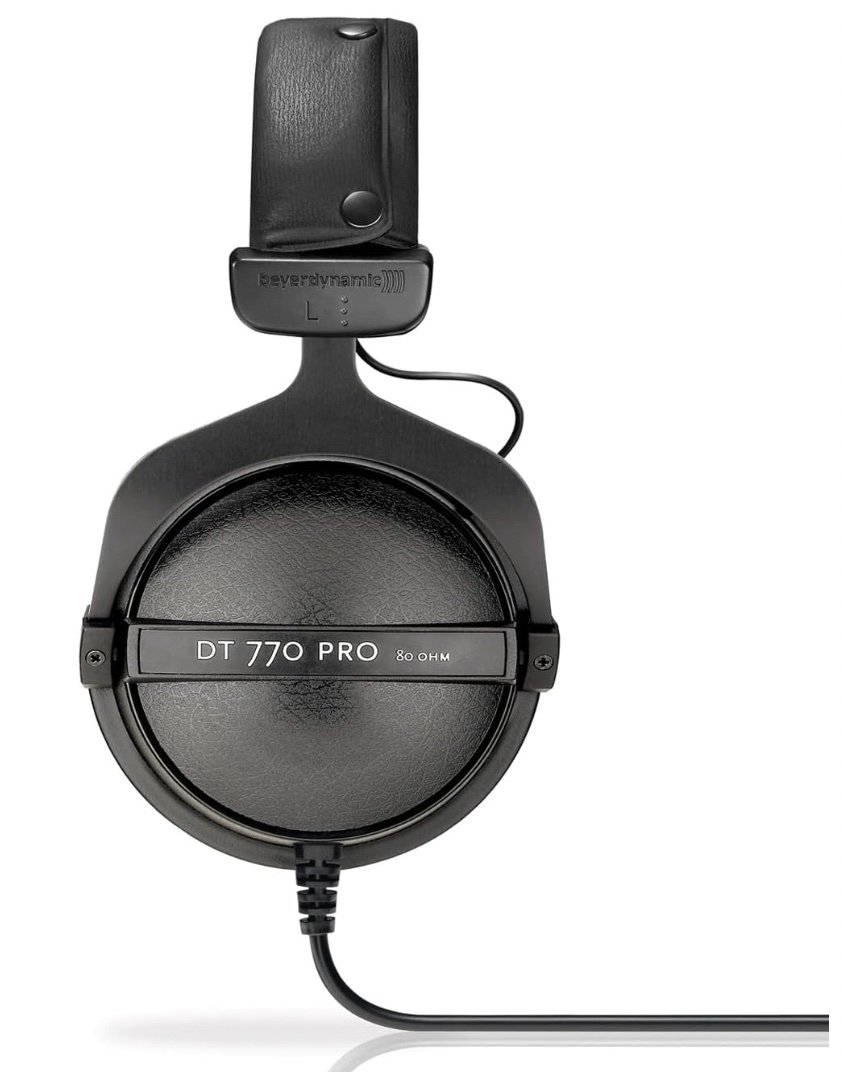
Driver: 45mm | Freq response: 5–35,000 Hz | Impedance: 80Ω closed-back
SPL: 96 dB | Weight: 270g | Foldable: No | Single-ear monitoring: Limited
Cable: Fixed coiled | Always specify 80Ω — not 250Ω
A note on impedance before anything else: the DT 770 Pro comes in three variants — 32Ω, 80Ω, and 250Ω. The 250Ω version requires a dedicated headphone amplifier and will output at painfully low volume from a standard DJ controller or mixer headphone output. The 80Ω closed-back is the correct version for DJ use — it delivers adequate volume directly from hardware without an amp.
With that out of the way: the DT 770 Pro 80Ω is one of the most respected closed-back studio monitoring headphones at this price point. The isolation is solid, the low-end is extended and accurate, and the velour earpads make them genuinely comfortable across long production sessions.
Where they fall short for DJing is portability. The fixed coiled cable is not ideal for a gig bag, there’s no fold mechanism, and one-ear monitoring is clumsy. These are a studio tool first. If you produce regularly and also play the occasional home set, they’re an excellent single purchase. If you play out, look elsewhere.
Pros
- Excellent closed-back studio monitoring
- Accurate, extended low-end
- Very comfortable for long sessions
- Strong passive isolation
- 80Ω drives easily from DJ hardware
Cons
- Fixed coiled cable — not portable
- No fold mechanism
- One-ear monitoring is awkward
- Studio tool — not a club headphone
Beginners
Pioneer DJ HDJ-CUE1
Best for: Beginners and home practice
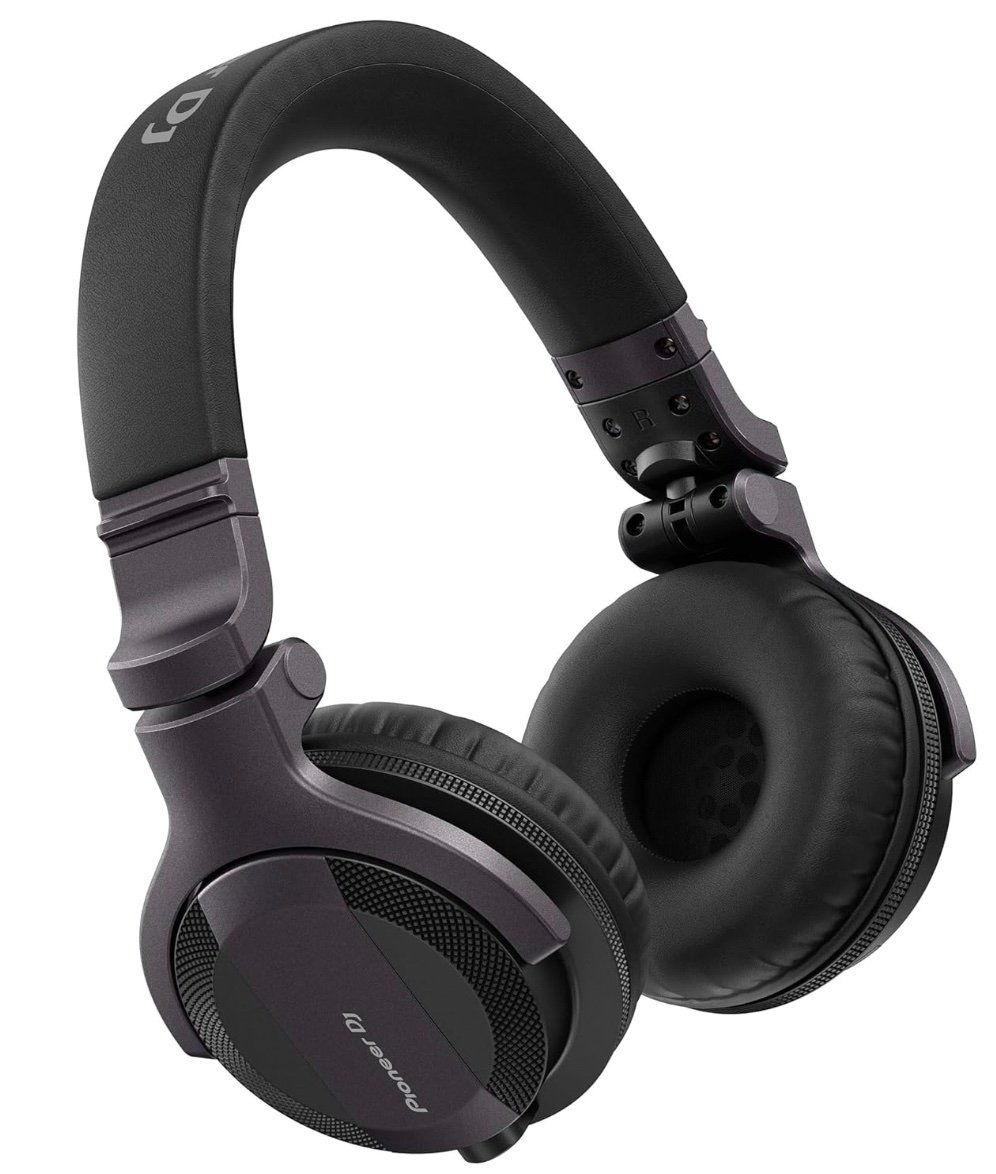
Driver: 40mm | Freq response: 5–30,000 Hz | Impedance: 32Ω
SPL: 102 dB | Weight: 195g | Foldable: Yes | Single-ear monitoring: Yes
Cable: Detachable coiled + straight
The HDJ-CUE1 is Pioneer’s entry-level DJ headphone and the most sensible first purchase for anyone learning to DJ. It does all the DJ-specific things correctly — swivelling earcups for one-ear monitoring, a foldable frame for portability, detachable cables — at a price that makes sense when you’re still figuring out whether DJing is going to stick.
The sound is coloured and bass-forward in typical DJ headphone fashion. Isolation is decent for home use, though it won’t hold up in a loud club booth. The 40mm drivers are smaller than the pro models above, and you’ll hear the difference in clarity and extension if you compare directly. But at this price there’s no comparable DJ-specific headphone from a brand with Pioneer’s reliability track record.
When you’re ready to upgrade, the natural step up is the HD 25 — they’re a different proposition entirely and the gap will be immediately obvious.
Pros
- DJ-optimised design at a low price
- Swivel cups and foldable frame
- Detachable cables
- Pioneer build quality at entry level
- 32Ω — easy to drive from any gear
Cons
- Smaller 40mm drivers vs pro models
- Isolation not adequate for loud booths
- Noticeable step down from HD 25
Budget Pro-Style
Pioneer DJ HDJ-CX
Best for: Budget-conscious DJs who need a portable on-ear option
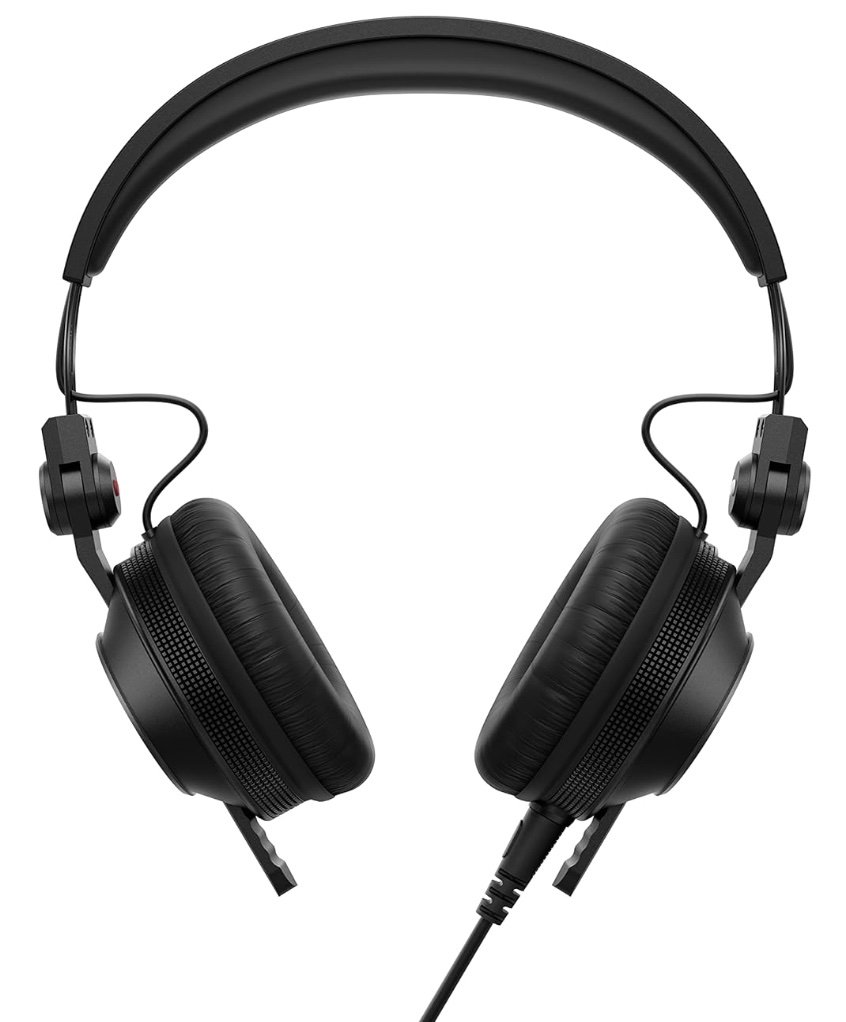
Driver: 40mm | Freq response: 5–30,000 Hz | Impedance: 32Ω
SPL: 102 dB | Weight: 148g | Foldable: Yes | Single-ear monitoring: Yes
Cable: Detachable coiled + straight
The HDJ-CX replaced the discontinued HDJ-S7 as Pioneer’s compact professional on-ear option. At 148g it’s the lightest headphone in this roundup — fractionally heavier than the HD 25 but notably more compact when folded, making it a practical choice for DJs who prioritise pack size.
The specs are similar to the HDJ-CUE1, but the HDJ-CX sits in a slightly different position: it’s aimed at working DJs on a tighter budget rather than beginners. The on-ear design and low weight make one-ear monitoring natural, isolation is reasonable for smaller venues, and the build feels more durable than the CUE1.
It won’t match the HD 25 in isolation or the HDJ-X10 in comfort, but for the price it covers the practical essentials well. A solid option if the CUE1 feels too entry-level but the HD 25 is currently out of budget.
Pros
- Ultra-lightweight at 148g
- Very compact when folded
- Natural one-ear monitoring
- More durable feel than CUE1
- Good value for working DJs
Cons
- Isolation behind HD 25
- On-ear fit not for everyone
- Not a significant sound upgrade over CUE1
Quick Comparison
| Model | Best For | Driver | Impedance | Weight | Foldable |
|---|---|---|---|---|---|
| Sennheiser HD 25 | Club / booth work | 50mm | 70Ω | 140g | Yes |
| Pioneer HDJ-X10 | Premium DJ monitoring | 50mm | 32Ω | 332g | Yes |
| Audio-Technica ATH-M50x | Home DJ / hybrid | 45mm | 38Ω | 285g | Yes |
| Beyerdynamic DT 770 Pro 80Ω | Producer who DJs | 45mm | 80Ω | 270g | No |
| Pioneer HDJ-CUE1 | Beginners | 40mm | 32Ω | 195g | Yes |
| Pioneer HDJ-CX | Budget pro-style | 40mm | 32Ω | 148g | Yes |
What to Look For in DJ Headphones
DJ Headphones vs Studio Headphones
Studio headphones are designed for accuracy — a flat, neutral frequency response so you can hear exactly what’s in a recording. DJ headphones are designed for working environments: louder, more coloured sound that cuts through booth noise, better passive isolation, and practical features like swivelling earcups and foldable frames.
The distinction matters most in loud venues. In a club, the neutral response of a studio headphone makes it harder to hear the kick drum and bassline clearly enough to cue confidently. A DJ headphone’s bass-forward tuning compensates for that. At home or in a studio the difference is less critical — which is why the ATH-M50x and DT 770 Pro work well for DJs who mostly play at home.
Key Things to Prioritise
- Closed-back design — essential for passive isolation in loud environments. Open-back headphones bleed sound and offer no isolation in a booth.
- Swivelling earcups — needed for one-ear monitoring while cueing. Not all headphones do this well.
- Low impedance — 32Ω–80Ω drives easily from a DJ controller or mixer. Avoid 250Ω models unless you have a dedicated headphone amp.
- Foldability — important if the headphone travels. Fixed designs like the DT 770 Pro are fine in a studio but not in a gig bag.
- Weight — matters more than most buyers expect. A heavy headphone worn one-ear for a four-hour set becomes uncomfortable fast.
What the Booths Actually Use
The Sennheiser HD 25 is the closest thing to a universal booth standard. It’s been the dominant professional club headphone for decades and shows no sign of being displaced. The Pioneer HDJ-X10 is the most credible premium alternative, but it’s not the HD 25 in terms of ubiquity. If you’re buying one pair for club work and want the safest choice, the HD 25 is still that choice.
If you play on high-end hardware — an AlphaTheta Euphonia or DJM-V5 — the HDJ-X10 is a natural pairing. Both are built to the same tier of professional use.
Frequently Asked Questions
Yes. The HD 25 remains the global club-booth standard. The design is decades old and that’s the point — it works, it’s proven, and every part is user-replaceable. Nothing at the price has displaced it for booth use.
Yes, with caveats. Studio headphones like the ATH-M50x and DT 770 Pro 80Ω work well for home DJing and are excellent if you also produce. In loud club booths they’re less practical — the neutral tuning makes cueing harder and they lack the DJ-specific ergonomics of purpose-built models.
Impedance (measured in ohms) determines how much power a headphone needs to reach adequate volume. Low-impedance models (32Ω–80Ω) drive easily from DJ controllers, mixers, and phones. High-impedance models (250Ω+) need a dedicated headphone amplifier — without one, volume will be too low for practical use. Always check before buying.
Any closed-back headphone with low impedance will work at a basic level. What DJ-specific designs add are swivelling earcups for one-ear monitoring, a more durable build for live use, and a sound profile tuned for cueing in loud environments. If you play out regularly, those features matter. For home use only, the difference is smaller.
The Pioneer HDJ-CUE1 is the most sensible first purchase — built specifically for DJing, all the practical features included, and from a brand with a strong reliability track record. When you’re ready to upgrade, the Sennheiser HD 25 is the natural next step.
Related Reading
- Pioneer HDJ-X10 Review — Full Test
- AlphaTheta Euphonia Review
- AlphaTheta DJM-V5 Review
- Harmonic Mixing for DJs: Complete Guide
Some links in this post are affiliate links. If you buy through them we may earn a small commission at no extra cost to you — it helps fund the site.