
Weird & Wonderful Gear · Part 2
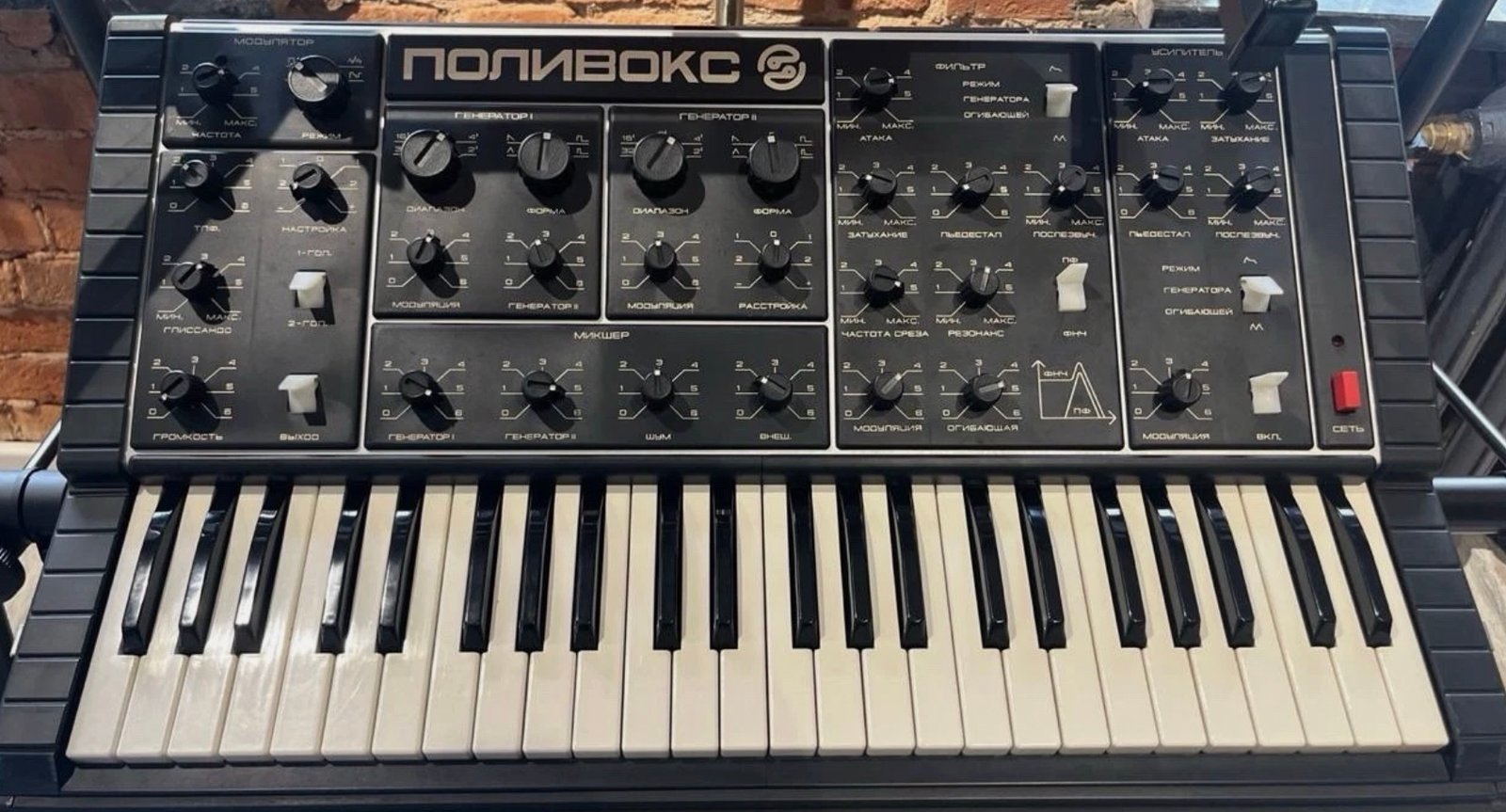
The Formanta Polivoks — the synth that launched a thousand techno basslines.
In the 1970s and 80s, the Soviet Union had no music-technology industry to speak of. What it had instead were state-owned radio and defence plants filling production quotas — and inside them, engineers who loved synthesizers. The instruments they built were heavy, strange, often labelled entirely in Cyrillic, and sounded like absolutely nothing coming out of America or Japan.
For decades these machines were curiosities. Now they’re prized: sampled by boutique labels, emulated by plugin developers, and hunted on the second-hand market by producers who want a sound that hasn’t been flattened by forty years of presets. If you read our odd drum machines feature, consider this the second wing of the museum — and this time, most of these sounds are a plugin or sample pack away.
★ A note on links: some links in this post are affiliate links. If you buy through them we earn a small commission at no extra cost to you. It helps keep the site independent — and it never decides what we recommend.
01
Formanta Polivoks
Built 1982–1990 at the Formanta Radio Factory, Kachkanar.
The one everybody knows, and the one that earns its reputation. Designed by engineer Vladimir Kuzmin — with panel styling by his wife Olimpiada, inspired by Soviet military radios — the Polivoks is a duophonic two-oscillator analogue synth with a filter unlike anything in the Western canon. Kuzmin built it around programmable op-amps that were never intended for audio, and the result is a gritty, unstable, snarling filter that howls when you push the resonance.
Around 100,000 were made, which is why it’s the one Soviet synth you’ll actually see in studios today. Composer Mick Gordon used an original Polivoks on the DOOM (2016) soundtrack — he’s said in interviews that with every control labelled in Russian, operating it was essentially an adventure. That accidental chaos is the appeal: it’s a synth that fights back.
Get the sound
Cherry Audio’s Atomika ($49) is the definitive emulation — circuit-modelled by Mark Barton, with the op-amp filter intact plus modern extras like 16-voice polyphony and an arpeggiator. If you’re a Kontakt user, Loot Audio’s Polivox instrument samples the real hardware. And Image-Line’s Sawer is a looser homage built around the Polivoks filter and envelopes.
Atomika — check price → Polivox Kontakt — check price → Sawer — check price →
02
ANS
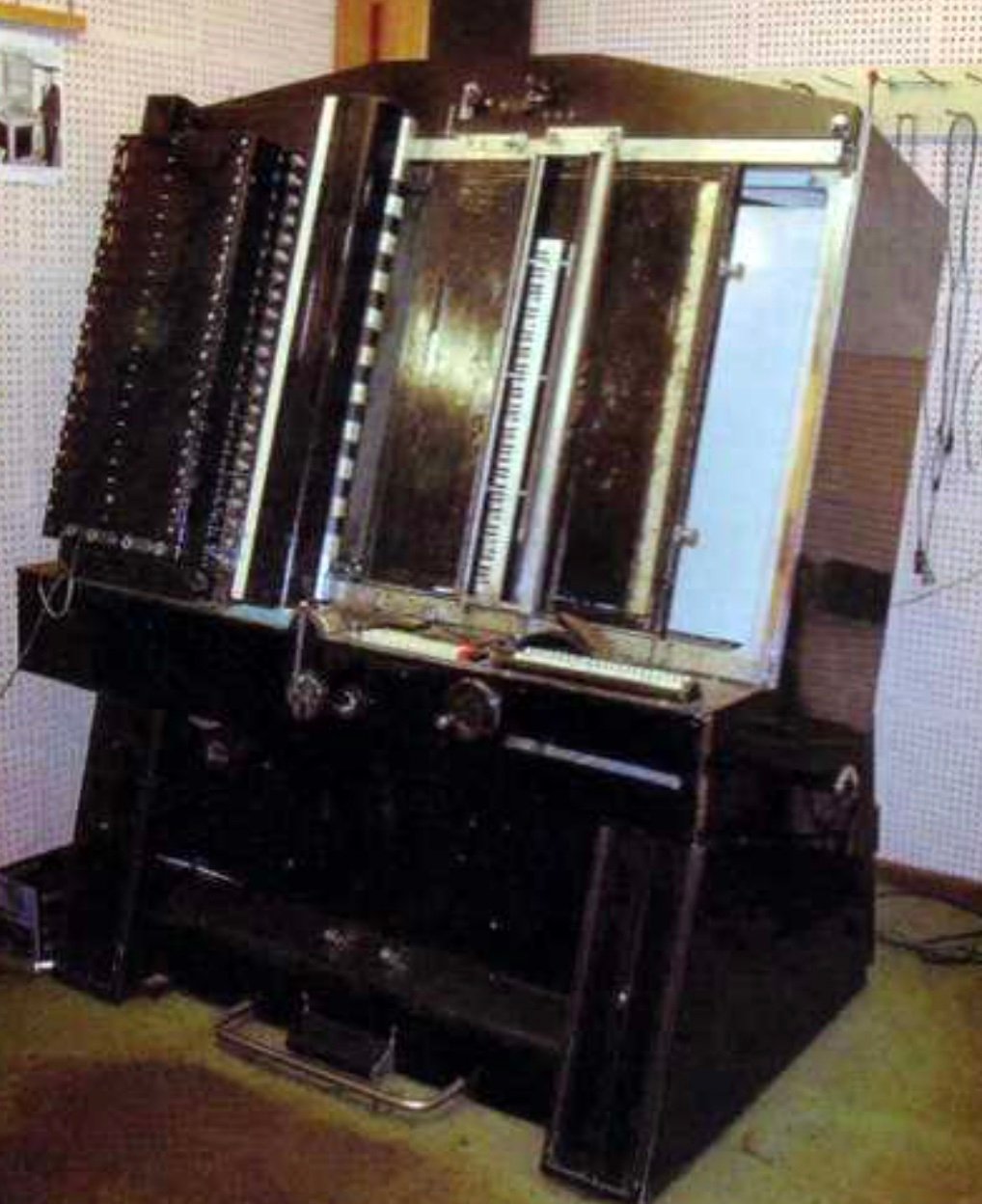
Twenty years in the making. There is one.
The strangest machine on this list, and possibly the strangest synthesizer ever built. Engineer Evgeny Murzin spent two decades — 1938 to 1958 — constructing the ANS, named after composer Alexander Nikolayevich Scriabin. It’s photoelectronic: you draw directly onto a glass plate coated in black mastic, light passes through your scratches, and the machine converts the drawing into sound across hundreds of pure sine-wave oscillators. No keyboard. No notes. You compose by etching a spectrogram by hand.
You’ve heard it even if you don’t know it — the ANS provides the alien atmospheres in Andrei Tarkovsky’s Solaris, Stalker and Mirror, and composers including Alfred Schnittke and Edward Artemiev used it in their experimental work. Decades later, British experimentalists Coil recorded an entire boxed set of drone pieces on the surviving machine.
Get the sound
No plugin company has touched this one, but you don’t need them: Virtual ANS by Alexander Zolotov (the SunVox developer) is a free, official-spirit simulator for Mac, Windows and Linux — draw an image, hear it as sound, or convert any sample into a spectrogram and mangle it. It’s one of the best free sound-design tools in existence and a genuine rabbit hole. Grab it at warmplace.ru (mobile versions are a few dollars on the app stores).
03
Aelita
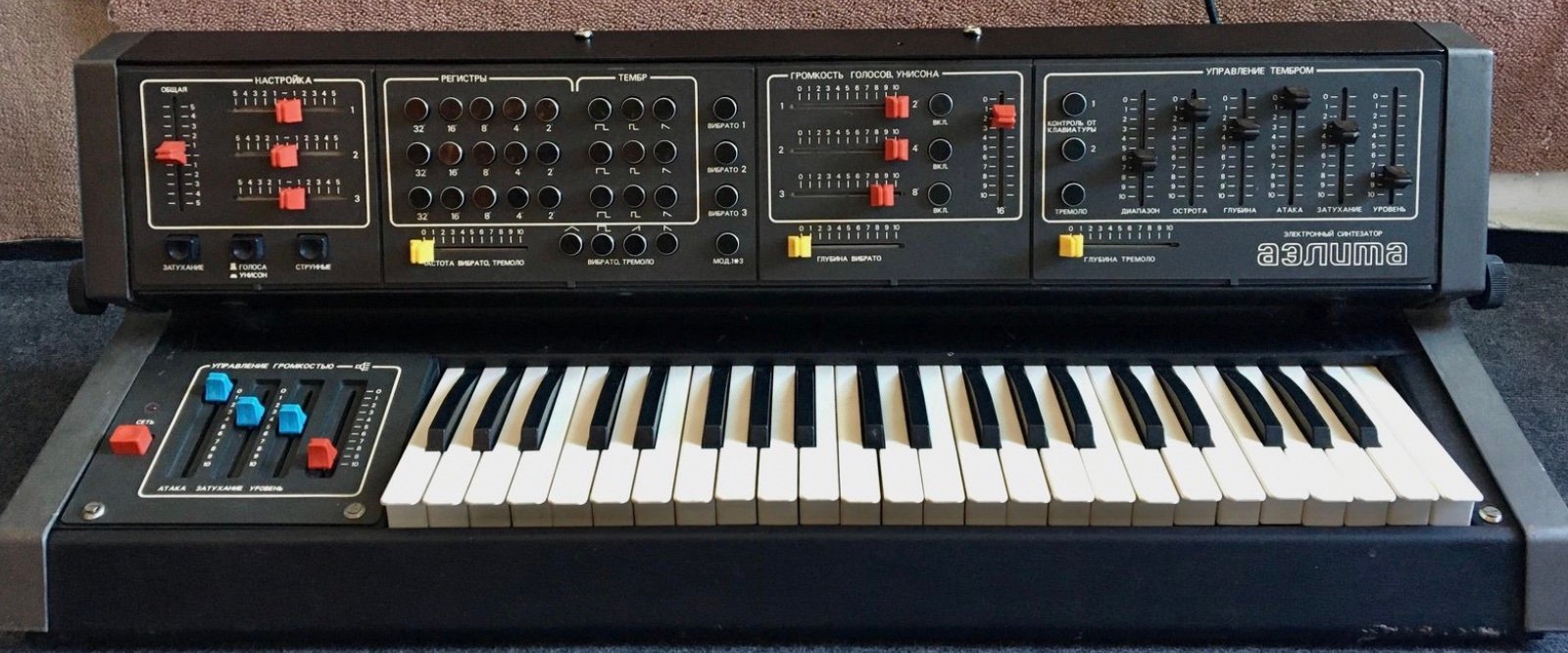
Born in a radio plant — it still has the radio buttons to prove it.
A three-oscillator monosynth built in a Soviet radio factory, and it shows: the preset selectors are literal radio buttons. The Aelita’s calling card is its resonance — sharp, cold and genuinely aggressive, run through a cutoff control the panel calls “timbre.” Add the onboard vibrato and its strange string-effect mode and you get basses and chord stabs with a hostile edge that modern soft synths have to work hard to fake. The case, naturally, weighs about as much as the furniture it sits on.
Get the sound
No dedicated emulation exists. The realistic route is Soviet Synths From Mars ($39, samplesfrommars.com) — a multi-sampled pack covering the Aelita alongside five other machines on this list, playable in any DAW or sampler. It’s not an affiliate link; it’s just the right answer. If you’re building your own patches from it, our Ableton guide covers working with sampled instruments.
04
Altair 231
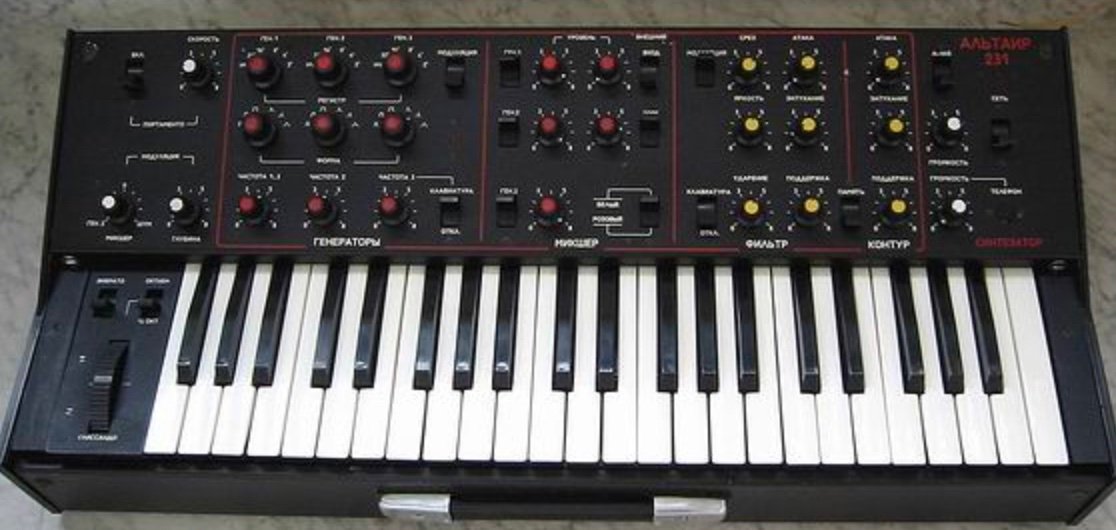
The People’s Minimoog — in layout, if not in sound.
Put the Altair 231’s panel next to a Minimoog and the resemblance is unmistakable: three oscillators, near-identical signal flow, same performance layout. But the story goes that its designers never actually had a Minimoog to copy — they worked from what they could glean — and whether it’s the home-grown circuitry or the military-spec components, it sounds nothing like Detroit’s favourite bass machine. It’s vibier and rougher, somewhere between a Roland SH-101 and an ARP 2600 that’s had a few drinks. Sampled polyphonically, it does gorgeous, wobbly strings and pads.
Get the sound
Sampled in depth in Soviet Synths From Mars ($39) — the pack’s multi-sampled presets let you play it polyphonically, which the hardware never could.
05
Estradin 230
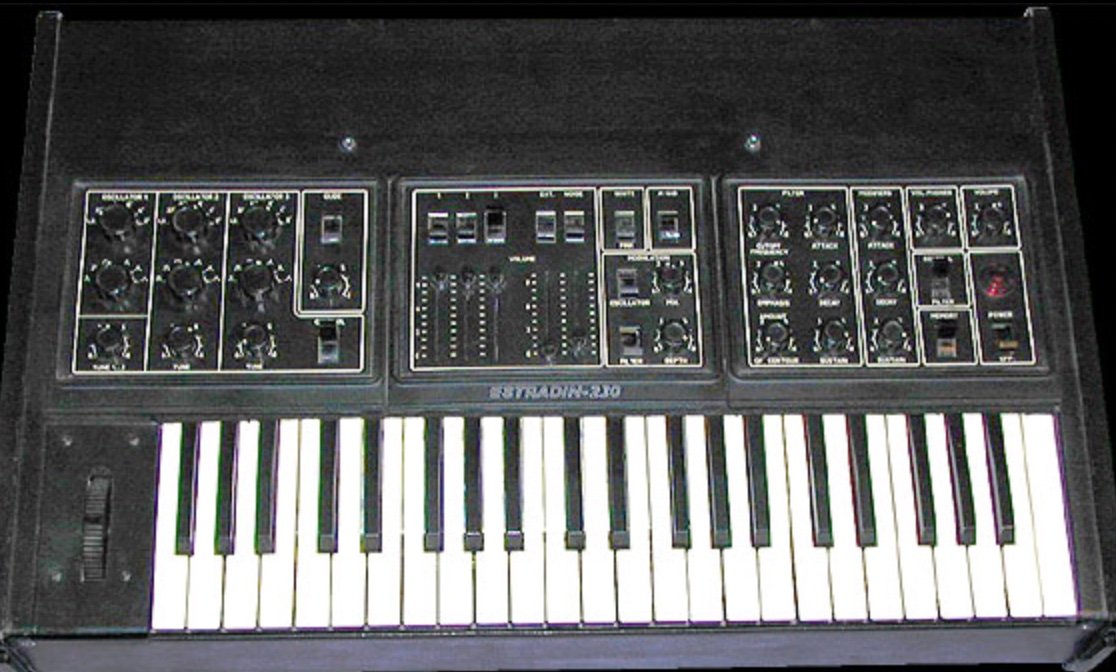
One of the largest monosynths ever manufactured.
The Altair 231’s older, vastly bigger sibling — functionally almost the same synth, housed in what is essentially a suitcase with storage compartments built into the lid. It’s a serious contender for the largest monophonic synthesizer ever put into production, and unusually for Soviet gear, the panel is labelled in English. The sound runs from snappy funk bass to slow, syrupy low-end and lush drifting soundscapes. Nobody needs one. Everybody who’s played one wants one.
Get the sound
Also covered in Soviet Synths From Mars ($39). Between the 230 and the Altair you get the full “Soviet Moog-that-isn’t” palette from one download.
06
Formanta EMS-01
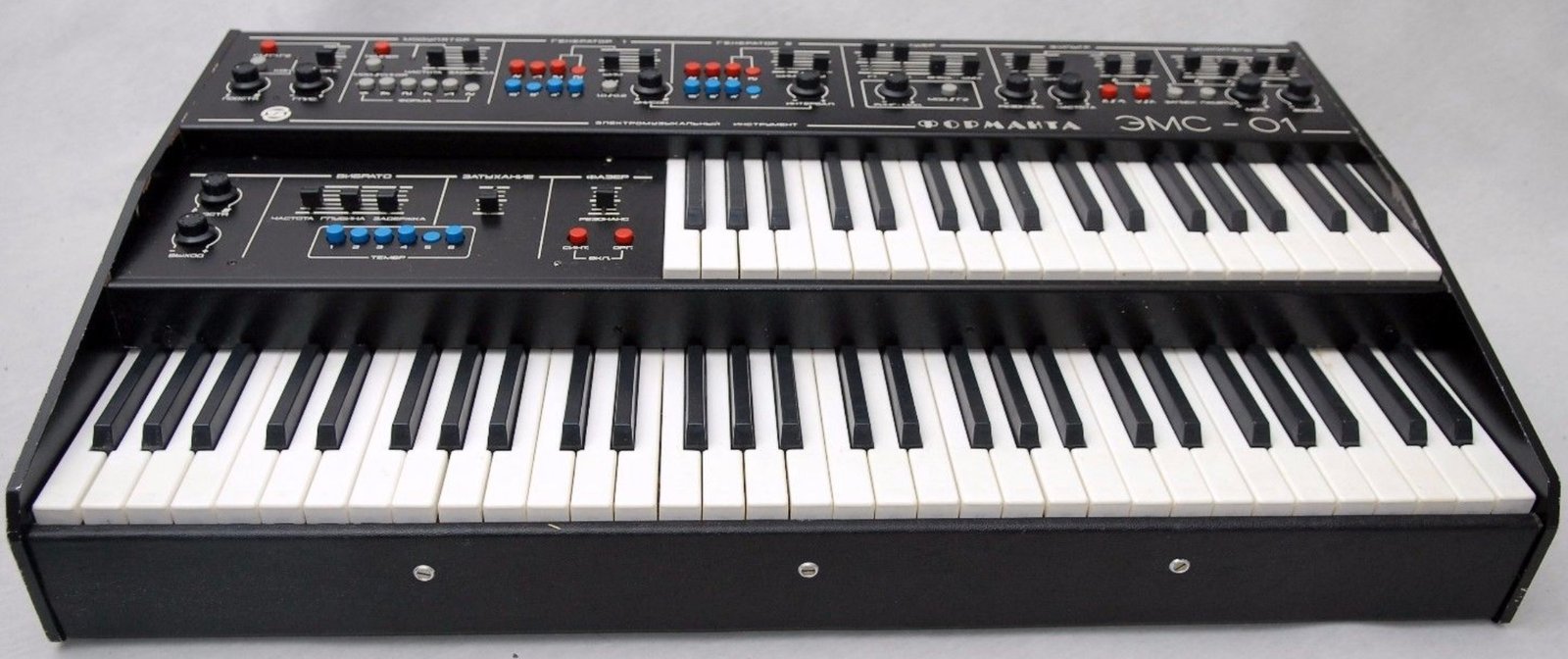
Formanta’s late-eighties flagship system.
What Formanta built after the Polivoks: a sprawling multi-section performance system combining synthesizer, string and organ voices under one (enormous) roof. It’s far rarer than its famous sibling and far less documented — which is exactly why collectors chase it. Where the Polivoks is a knife, the EMS-01 is a Swiss Army tank: layered ensemble textures with that unmistakable Soviet grain running through everything. If you find one in working order in Western Europe, you’ve found a unicorn.
Get the sound
Nothing emulates it directly. Your honest options: layer the Polivoks plugins above for the synth voice, or hunt the hardware on the second-hand market — the Museum of Soviet Synthesizers (ruskeys.net) is the reference point for what you’re looking at before you buy.
07
Maestro
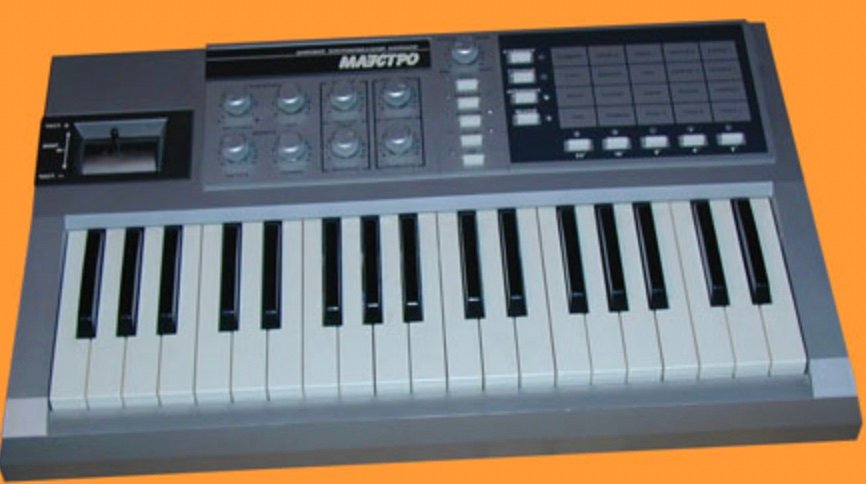
The USSR’s first digital/analogue hybrid.
The first Soviet synth with a digital microprocessor at its heart — driving preset voices with names like “Flute,” “Harp” and “Clarinet” that sound about as convincing as you’d expect from Cold War-era digital. That’s not the point. The point is what sits after the sound generator: a simple analogue filter capable of proper squelching acid, tremolo and vibrato effects with real charm, and an arpeggiator that turns those cheesy presets into glitchy, chiptune-adjacent textures when you push the rate. A machine that’s far better than the sum of its presets.
Get the sound
Sampled in Soviet Synths From Mars ($39). For the acid-filter angle specifically, Cherry Audio’s Filtomika — the Polivoks filter broken out as an effect plugin — is a cheap way to run any sound through Soviet-grade squelch.
08
Tom-1501
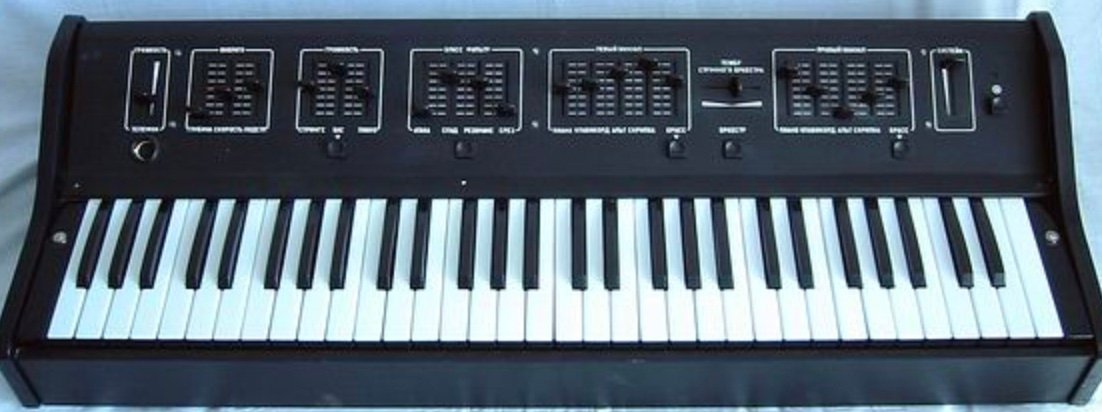
The Gulag orchestra: piano, clav, alto, violin and brass in one box.
A five-section analogue orchestral synth — Piano, Clav, Alto, Violin and Brass — in the tradition of the ARP Solina and Crumar Performer, but with a distinctly foggier, more distant character. The strings are the star: warm, fuzzy and beautifully lo-fi, especially when slowed down or run to tape. If you make anything in the ambient, lo-fi house or dusty-boom-bap neighbourhoods, this is the string machine sound you’ve been sampling second-hand without knowing its name.
Get the sound
Soviet Synths From Mars ($39) includes the 1501’s strings sampled both clean and pitched down through tape — arguably the best content in the whole pack. If you’re hunting more raw material for edits, see our guide to sample platforms compared.
09
Lell 23 / 24
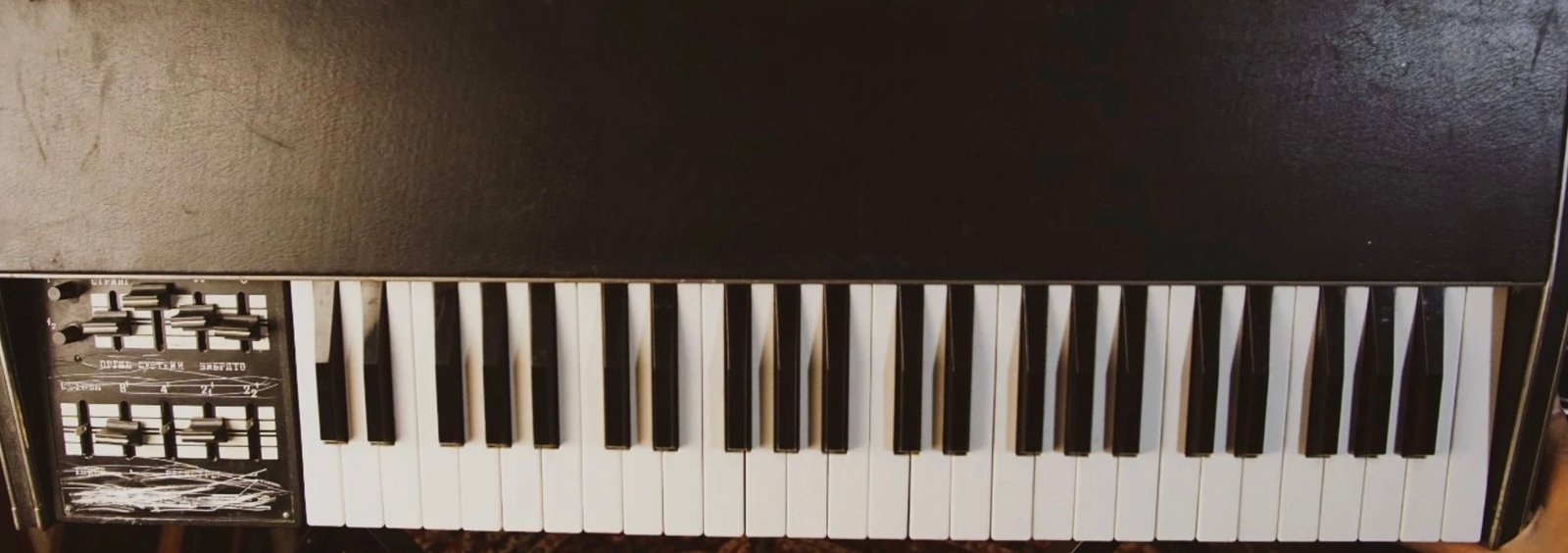
The bedroom Soviet synth.
Lell was the closest thing the USSR had to a “budget” synth brand, and the 23 and 24 were its everyman machines — simpler, lighter and cheaper than the Formanta flagships, which made them the synths that actually ended up in ordinary Soviet homes and school bands. They’re crude, and that’s the charm: thin, buzzy, honest analogue tones that sit brilliantly in a mix precisely because they don’t try to be lush. The cult around Lell gear has grown quietly as producers look for character the big names can’t provide.
Get the sound
No emulation, and it’s not in the Samples From Mars pack either (though the pack’s drum section does include the LELL UDS drum synth, a cousin). This one is a Reverb-and-eBay hunt — prices are still reasonable compared to the Polivoks, which makes it one of the last affordable entry points into real Soviet hardware.
10
Ritm-2
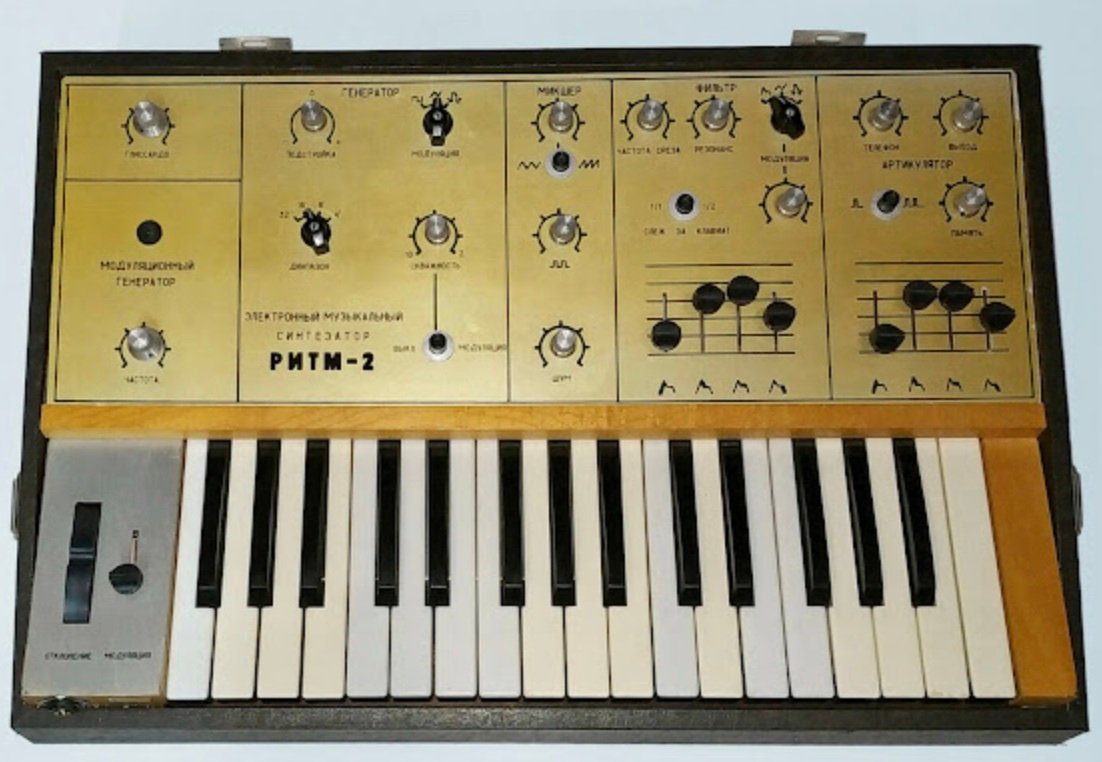
The connoisseur’s pick.
The deep cut. The Ritm-2 is a duophonic analogue synth that never had the Polivoks’s production numbers or fame, but among Soviet-gear collectors it has a devoted following for one reason: the sound. It shares that family trait of unstable, characterful oscillators and a filter with attitude, packaged in classic utilitarian Soviet styling. It’s the machine you mention to sort the tourists from the obsessives — and the one most likely to appreciate in value while nobody’s looking.
Get the sound
Hardware only — check the Museum of Soviet Synthesizers before you buy anything, because Soviet model numbers are a minefield and sellers get them wrong constantly.
The takeaway
You don’t need to import forty kilos of Cold War aluminium to use these sounds. The Polivoks lives on in genuinely excellent plugins, the ANS has one of the best free instruments ever made, and one $39 sample pack covers half this list. The Soviet synth story is the best kind of gear history: machines built with no market, no manual worth reading and no idea what the West was doing — which is exactly why they still sound like nothing else.
Part 3 of Weird & Wonderful Gear — forgotten British synths — is coming. Until then, the drum machines that built modern music are waiting in part 1, and if the plugin route has you curious about modern sound design, our Serum 2 review covers the other end of the spectrum entirely.