Last updated: October 2026
Britain produced some of the strangest electronic instruments ever sold. Several of them still shape the sounds DJs and producers use today. This entry in our Weird & Wonderful Gear series covers six: the Mellotron tape keyboard, the Vox Continental organ, the Dubreq Stylophone, the EMS VCS3, the EDP Wasp and the OSCar. Between them they used tape loops, a stylus on a metal keyboard, a pin-matrix patchbay, a flat touch keyboard and harmonics programmed from the keys.
The originals are rare, temperamental or both. Most DJs are better off getting the sound from a software emulation or a modern reissue. Below you’ll find the story behind each one, a single table that matches each instrument to the emulation that recreates it today, and what to check before buying an original.
Quick takeaways
- The six span 1962 to 1983, from transistor organs to an early digital/analogue hybrid.
- Each one made sound in a way that was unusual for its time: tape, a stylus, a pin matrix, a touch keyboard or additive harmonics.
- Every instrument here has a current emulation or a modern product carrying the name, so you don’t need the vintage hardware.
- The Stylophone is still made by Dubreq, and has sold over 4 million units by the company’s count.
- Buying an original means checking for tuning drift (VCS3), worn tapes (Mellotron) and power issues (Wasp).
- For DJ sets, the practical route is to resample emulation patches into loops and one-shots for your DJ software or groovebox.
Chart: The DJ Mixtape, from the dates and sources cited in this post, October 2026.
What makes British electronic instruments so odd?
British instrument makers of the 1960s to 1980s were mostly small firms working to tight budgets, which pushed them towards unusual engineering shortcuts. EMS worked out of Putney in London, which gave the VCS3 its nickname “The Putney”, according to Sound On Sound’s history of EMS. Electronic Dream Plant set out to build a synth far cheaper than Moog, Oberheim or Roland, per Sound On Sound’s obituary of co-founder Adrian Wagner. The results often sounded like nothing else. That’s why emulation makers keep returning to them.
If you’ve read our guides to odd drum machines and Soviet synths, the pattern will be familiar: constraints produce character.
1. Mellotron (1963): the tape “sampler” before samplers
The Mellotron is a keyboard in which every key plays its own length of recorded tape, which made it a sample-playback instrument decades before digital samplers. According to MusicTech, the Bradley brothers of Birmingham adapted the American Chamberlin design. Their company, Mellotronics, launched the Mark I in 1963, and the manufacturing arm became Streetly Electronics.
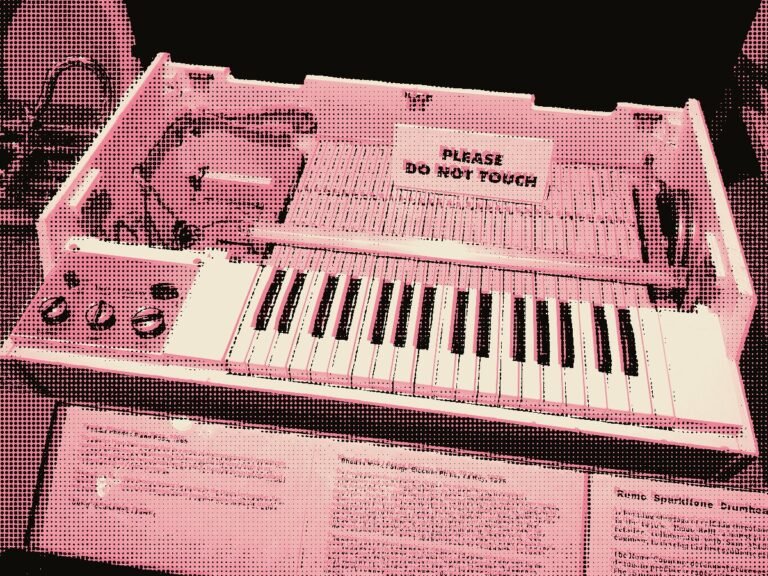
Photo: doryfour, Wikimedia Commons, CC BY-SA 2.0. Colour-treated by The DJ Mixtape and shared under the same licence.
What made the Mellotron odd?
Each key triggered a strip of tape that ran for eight seconds before rewinding to its start. Hold a note longer than that and it simply stopped. The early models were heavy and unstable on the road; the M400 of 1970 was the first truly portable model.
How was the Mellotron used?
MusicTech credits the Mellotron with the flute introduction on the Beatles’ “Strawberry Fields Forever” and the Moody Blues’ “Nights In White Satin” (both 1967). Oasis used its cello sound on “Wonderwall” during the 1990s revival.
Hear it: Arturia’s official demo of Mellotron V, its software recreation of the Mellotron’s tape racks.
Video: official demo from Arturia’s YouTube channel. It plays the software emulation, not an original unit. Loads from YouTube when you press play.
How do you get the Mellotron sound today?
Fewer than 1,000 working units are thought to exist, per MusicTech, so software is the realistic route. Arturia Mellotron V (around $149 at time of writing) models 65 tape racks from the MKI, MKII, M300 and M400. GForce M-Tron Mk II (around $200) covers the Mellotron MkI/MkII and the Chamberlin Musicmaster.
2. Vox Continental (1962): the organ that cut through the band
The Vox Continental is a transistor organ made by Jennings Musical Industries (JMI) in Dartford, Kent, the same firm behind Vox amplifiers such as the AC30. MusicTech dates its release to 1962, and the Vox serial-number archive shows serial numbers starting in late 1962.
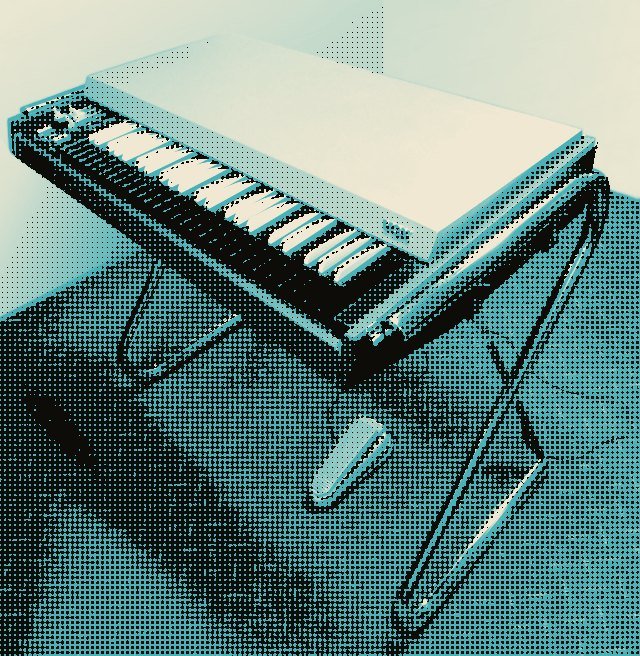
Photo: Docrobbie, Wikimedia Commons, CC BY-SA 4.0. Colour-treated by The DJ Mixtape and shared under the same licence.
What made the Vox Continental odd?
It looked nothing like a church or jazz organ: a flat red cabinet, reverse-coloured keys and a Z-shaped chrome stand. It also sounded sharper and more piercing than the Hammond organs of the day, per MusicTech.
How was the Vox Continental used?
MusicTech lists the Animals’ “House of the Rising Sun”, the Doors’ “Light My Fire”, ? & the Mysterians’ “96 Tears” and Steve Nieve’s playing with Elvis Costello.
Hear it: Arturia’s official introduction to Vox Continental V, its software model of the organ.
Video: official demo from Arturia’s YouTube channel. It plays the software emulation, not an original unit. Loads from YouTube when you press play.
How do you get the Vox Continental sound today?
Arturia Vox Continental V (around $99 at time of writing) models the dual-manual Continental 300 and adds a Jennings J70 mode, amp and rotary-speaker simulations and spring reverbs. Korg, which bought the Vox brand in 1992, also released a modern hardware Vox Continental in 2018, per MusicTech.
3. Dubreq Stylophone (1968): the pocket synth played with a pen
The Stylophone is a pocket electronic instrument played by touching a stylus to a metal keyboard printed on a circuit board. Dubreq’s own history says Brian Jarvis of Dubreq Studios in London came up with it in 1968 while repairing his niece’s toy piano.
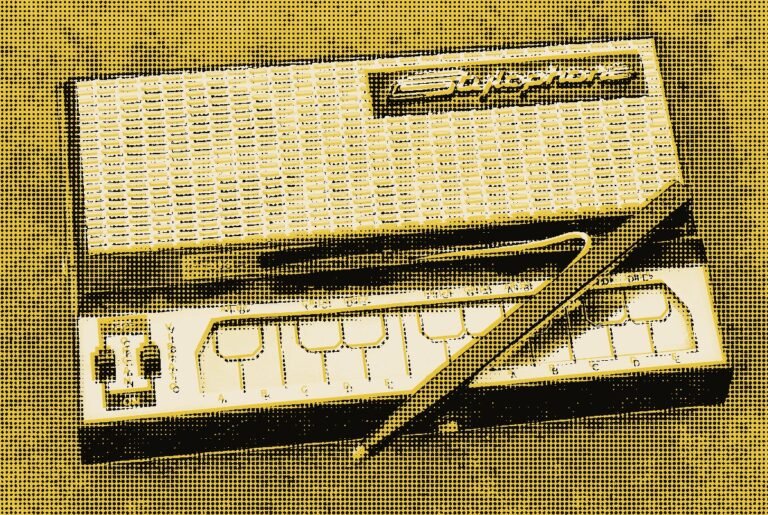
Photo: Fisle Nor, Wikimedia Commons, CC BY-SA 4.0. Colour-treated by The DJ Mixtape and shared under the same licence.
What made the Stylophone odd?
There are no keys to press. The stylus completes a circuit on the printed keyboard, driving a single simple oscillator. It started life as a toy-repair idea, but its buzzing tone found its way onto real records.
How was the Stylophone used?
Dubreq calls David Bowie’s “Space Oddity” (July 1969) the first pop song to feature the Stylophone, and lists Kraftwerk among the artists who took it up.
Hear it: Stylophone’s own short clip of the S1 Original, the current version of the pocket synth.
Video: official demo from Stylophone’s YouTube channel. Loads from YouTube when you press play.
How do you get the Stylophone sound today?
This is the easiest one on the list: Dubreq still makes it. The current range includes the Original S1, a David Bowie Edition and more serious models such as the DS-2 drone synth, per the company’s site.
Check Stylophone price on Amazon →
4. EMS VCS3 (1969): the portable synth with no patch cables
The EMS VCS3 (Voltage Controlled Studio No. 3) is a compact analogue synth from Electronic Music Studios in London, routed with pins in a matrix instead of patch cables. Sound On Sound dates it to November 1969 and calls it the first portable synth. The Science Museum notes it arrived about a year before the Minimoog and ARP 2600. EMS was formed by Peter Zinovieff, David Cockerell and Tristram Cary.
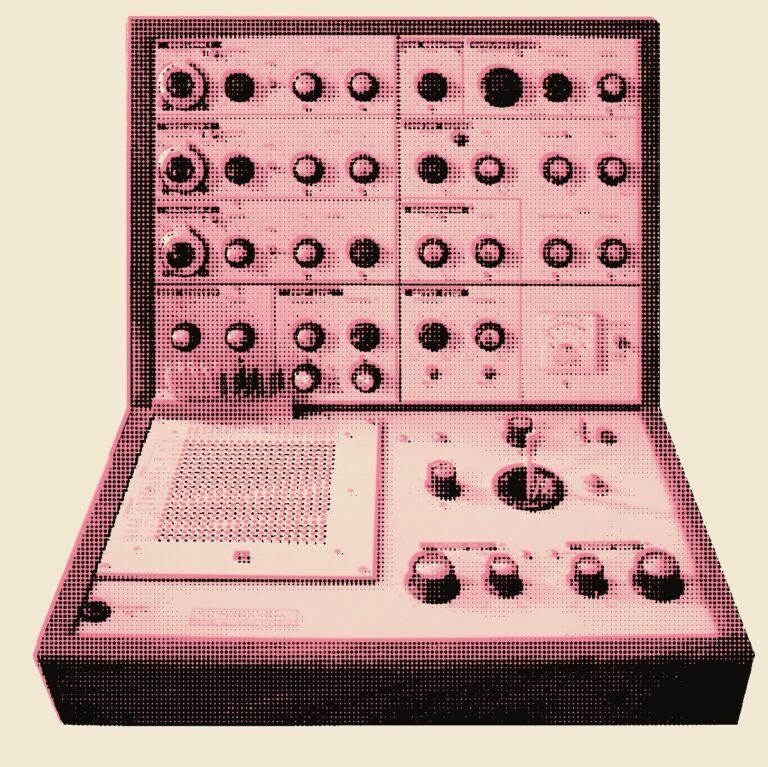
Photo: Rosa Menkman, Wikimedia Commons, CC BY 2.0. Colour-treated by The DJ Mixtape and shared under the same licence.
What made the VCS3 odd?
A pin matrix is a grid where each row is a signal source and each column a destination; push a pin in and the two are connected. The VCS3’s 16 x 16 pin board was about 10cm square, per Sound On Sound. It had three oscillators, a noise generator and a joystick that controls two parameters at once. Keeping it in tune was famously hard: each oscillator was tuned by hand and ear.
How was the VCS3 used?
Sound On Sound credits it with the pulsing sounds of “On The Run” on Pink Floyd’s Dark Side Of The Moon, and notes that Brian Eno played one with Roxy Music. The Science Museum also lists Yes and the Who.
Hear it: Arturia’s official demo of Synthi V, its software model of the EMS Synthi AKS (Arturia describes the VCS3 as the Synthi’s forerunner).
Video: official demo from Arturia’s YouTube channel. It plays the software emulation, not an original unit. Loads from YouTube when you press play.
How do you get the VCS3 sound today?
Arturia Synthi V (around $149 at time of writing) is a component-level model of the EMS Synthi AKS. Arturia describes the VCS3 as the Synthi’s forerunner, and Synthi V recreates the pin matrix as a virtual pinboard, with a vintage mode that simulates cross-talk.
5. EDP Wasp (1978): the punk synth with a flat keyboard
The EDP Wasp is a small, cheap monophonic synth designed by Chris Huggett for Electronic Dream Plant, the company run by Adrian Wagner. The Science Museum Group collection dates it to around 1978; Sound On Sound’s obituary of Wagner places its release in 1977.
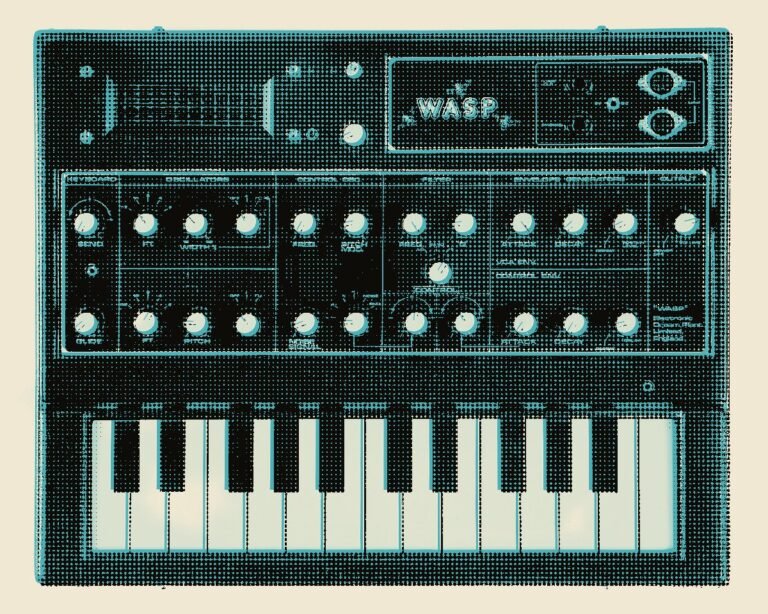
Photo: R.Bartz, Wikimedia Commons, CC BY-SA 2.5. Colour-treated by The DJ Mixtape and shared under the same licence.
What made the Wasp odd?
According to Sound On Sound’s retro review, the Wasp had a flat two-octave keyboard that sensed skin contact, so it doesn’t work with gloves. It ran on six C batteries or an external supply, had a built-in speaker and paired two digital oscillators with an analogue filter. Its “Link” sockets used 7-pin DIN plugs but weren’t MIDI.
How was the Wasp used?
Sound On Sound’s reviewer rates the filter as punchy and well suited to acid, techno and bass sounds. Robert Rental and Thomas Leer used two Wasps on early demos.
Hear it: Behringer’s official introduction to the Wasp Deluxe, its modern hardware remake.
Video: official demo from Behringer’s YouTube channel. It plays the modern remake, not an original EDP unit. Loads from YouTube when you press play.
How do you get the Wasp sound today?
Behringer’s Wasp Deluxe is a modern remake of the later Wasp Deluxe, reviewed by Sound On Sound in 2025. It adds MIDI, a notch filter mode and an external audio input, but has no speaker or preset memory.
Check Wasp Deluxe price on Amazon →
6. OSCar (1983): the rubber-cheeked hybrid
The OSCar is a mostly monophonic synth from the Oxford Synthesiser Company, also designed by Chris Huggett, that combined digital oscillators with analogue filters. Sound On Sound says it launched at the 1983 Frankfurt show, with shipments from April that year.
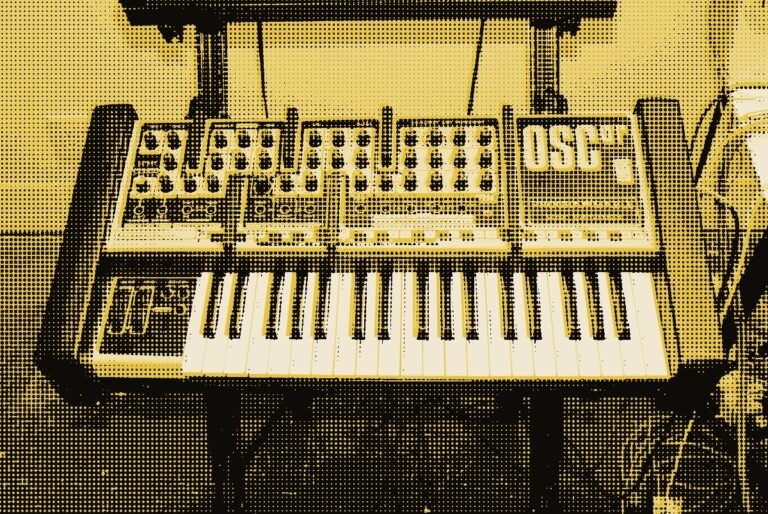
Photo: Brandon Daniel, Wikimedia Commons, CC BY-SA 2.0. Colour-treated by The DJ Mixtape and shared under the same licence.
What made the OSCar odd?
Additive synthesis builds a sound by stacking individual harmonics. On the OSCar, per Sound On Sound’s retro review, you could press the top 24 keys to add the matching harmonic to a waveform in real time. It also had a Separation control that pulled its two filters apart, a volume knob that overdrove the filter and big rubber end blocks that protected the case if dropped.
How was the OSCar used?
Sound On Sound lists Ultravox, John Foxx, Geoff Downes, Jean-Michel Jarre, Keith Emerson and Stevie Wonder among its users.
Hear it: GForce’s official mini demos of impOSCar3, its software recreation of the OSCar.
Video: official demo from GForce Software’s YouTube channel. It plays the software emulation, not an original unit. Loads from YouTube when you press play.
How do you get the OSCar sound today?
GForce impOSCar3 (around $120 at time of writing) is the emulation. According to GForce, Huggett gave the project his blessing and supplied his original firmware source code.
How do these six British instruments compare?
The table below sets each instrument’s maker, year and sound-making method against the current way to get its sound. Prices are for the software and are approximate at time of writing.
| Instrument | Maker, place | Year | How it makes sound | Why it’s odd | Get the sound today |
|---|---|---|---|---|---|
| Mellotron | Mellotronics / Streetly Electronics, Birmingham | 1963 | Tape playback, one strip per key | Notes stop after 8 seconds | Arturia Mellotron V ($149); GForce M-Tron Mk II ($200) |
| Vox Continental | JMI, Dartford | 1962 | Transistor organ | Reverse-coloured keys, piercing tone | Arturia Vox Continental V ($99) |
| Stylophone | Dubreq, London | 1968 | Single oscillator, stylus on a printed keyboard | Played with a pen | Still made by Dubreq |
| EMS VCS3 | EMS, Putney, London | 1969 | Analogue, 3 oscillators + noise | 16 x 16 pin matrix, joystick | Arturia Synthi V ($149) |
| EDP Wasp | Electronic Dream Plant | c. 1978 | 2 digital oscillators, analogue filter | Flat touch keyboard, battery power, built-in speaker | Behringer Wasp Deluxe (hardware remake) |
| OSCar | Oxford Synthesiser Company | 1983 | Digital oscillators, dual analogue filters | Harmonics added from the keys, rubber end blocks | GForce impOSCar3 ($120) |
Should you buy an original, and what should you check?
For most DJs, buying an original only makes sense as a collector’s purchase; the emulations cover the sound with far less upkeep. If you do go vintage, these are the known weak points from the sources above:
- EMS VCS3: no longer made and scarce on the used market. Oscillators need tuning by hand and ear, so check it holds pitch once warm.
- Mellotron: fewer than 1,000 working units are thought to exist. Ask about the condition of the tape frames and when it was last serviced.
- EDP Wasp: Sound On Sound advises against battery power because it drains quickly, and notes the speaker can hum on an unstable supply. The touch keyboard needs bare skin.
- OSCar: MIDI was added about a year after launch and could be retrofitted, so check whether a unit has it.
- Vox Continental: make sure you know whether you’re looking at an original JMI unit or the 2018 Korg-era instrument. The serial-number archive is a useful starting point.
How can a DJ use these sounds in a set?
The simplest way to use these sounds in a DJ set is to record short phrases from an emulation and play them back as loops or one-shots. A Mellotron flute or choir line works as a breakdown pad; a VCS3 sweep makes a transition effect; a Stylophone melody is an instantly recognisable hook over a stripped-back groove.
- Resample in your DAW. Bounce patches to key-labelled loops at your set’s usual tempo. Our Ableton Live 12 guide covers the workflow.
- Trigger from hardware. Load the loops into a groovebox and play them over the decks. Our guide to using a groovebox in a DJ set covers how to fit one into a set.
- Use sample libraries. If you don’t want to programme synths at all, our comparison of sample services is a starting point for ready-made loops.
FAQ
What was the first portable synthesizer?
Sound On Sound calls the EMS VCS3, launched in London in November 1969, the first portable synth. The Science Museum describes it as more or less the first portable, commercially available synthesizer.
Is the Stylophone still made?
Yes. Dubreq still makes the Stylophone, including the Original S1 and a David Bowie Edition, alongside newer models such as the DS-2 drone synth.
What’s the best plugin for a Mellotron sound?
The two main options are Arturia Mellotron V, which models tape racks from four Mellotron models, and GForce M-Tron Mk II, which covers the MkI/MkII and the Chamberlin. Which suits you depends on which models and sounds you want.
Who designed the Wasp and the OSCar?
Chris Huggett designed both. He later designed the Bass Station for Novation in the 1990s, per Sound On Sound.
Can you use a VCS3 or Synthi sound in a DJ set?
Yes, most easily by recording sweeps and textures from an emulation such as Arturia Synthi V and triggering them as samples. Using an original live is impractical because it needs regular retuning.
Chart: The DJ Mixtape, mapping each instrument to the emulation or remake covered above, October 2026.
Which British oddity should you start with?
- Want instant character for breakdowns? Start with a Mellotron emulation.
- Want sweeps, drones and transition effects? Try Arturia Synthi V.
- Want acid-leaning bass on real hardware? Look at the Behringer Wasp Deluxe.
- Want a cheap, playable novelty with a real history? Get a Stylophone.
- Want early-80s synth-pop leads? GForce impOSCar3.
- Want 60s garage organ? Arturia Vox Continental V.
Skip the vintage hardware unless you’re collecting. Upkeep, tuning and scarcity make originals a poor fit for gigging DJs.
How we research: history, specs and prices were checked against manufacturers’ official pages, museum collections and Sound On Sound and MusicTech archives in October 2026. Photos are from Wikimedia Commons under the Creative Commons licences credited beneath each one, colour-treated by us. Demo videos are the makers’ own. Written for The DJ Mixtape by Dan, DJing since 1994.